Pincushion hakea
Hakea laurina R. Br.
Description
Pincushion hakea (Hakea laurina) is a distinctive evergreen shrub or small tree belonging to the Proteaceae family. It is widely recognized for its unique, globular flower heads that resemble pincushions, making it a highly desirable specimen for gardens in temperate and Mediterranean climates.
The species is native to the southwestern regions of Western Australia. In its natural habitat, it thrives in sandy, well-drained soils and is well-adapted to environments with prolonged dry periods. Due to its hardiness and aesthetic appeal, it has been introduced as an ornamental plant in various subtropical regions across the globe.
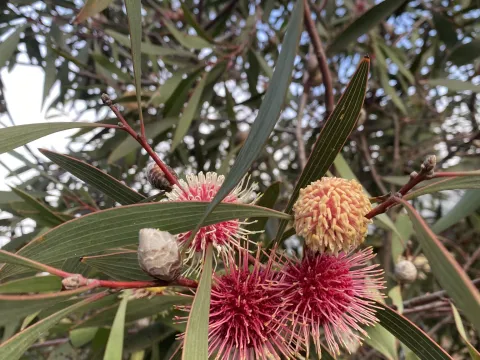
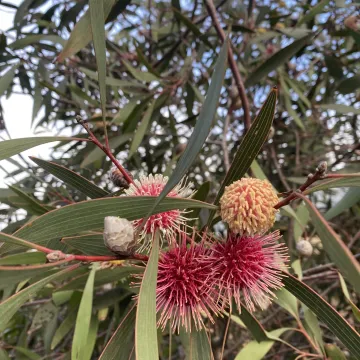
Botanically, the plant features leathery, elliptical leaves that provide a lush backdrop for its dramatic winter blooms. The flowers consist of spherical clusters with long, bright red styles that emerge from creamy-white bases, creating a striking visual contrast. These blooms are long-lasting and provide an essential nectar source for birds during the colder months.
Agrotechnical requirements for Hakea laurina focus on excellent drainage and minimal fertilization. Like many Proteaceae, this plant is sensitive to high phosphorus levels, which can be fatal. It prefers full sun and thrives in acidic to neutral soils. Once established, the plant is remarkably drought-tolerant, requiring irrigation only during exceptionally dry spells.
The primary use for this species is ornamental planting in parks and private gardens. While generally robust, the plant is susceptible to root rot if waterlogged, and it can be occasionally attacked by aphids or scale insects. Maintenance is straightforward, primarily involving light pruning after flowering to encourage dense growth and manage the plant's size.
Photo gallery