Java long pepper
Piper chaba
Description
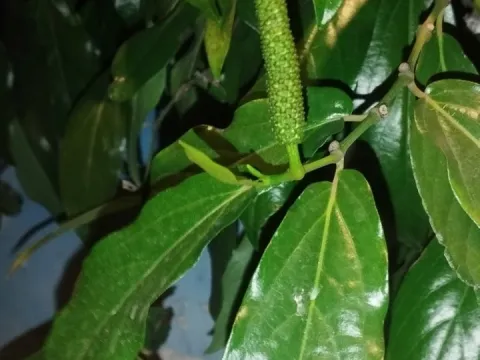
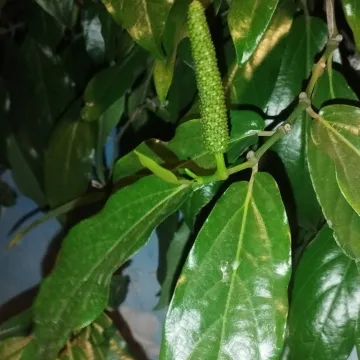
Java long pepper (Piper chaba) is a perennial woody climber belonging to the Piperaceae family. This agricultural crop is highly valued for its aromatic, pungent fruits, which contain potent bioactive compounds such as piperine, distinguishing it from common black pepper.
The plant originates from the tropical regions of Southeast Asia, specifically Indonesia and the Indian subcontinent. It thrives in humid, shaded forest environments where it can climb tree trunks, which serves as a natural model for its cultivation in plantation settings.
Botanically, Piper chaba is characterized by its evergreen leaves, which are leathery and glossy, and its dense, spike-like inflorescences. These spikes develop into fruiting bodies that contain numerous small seeds. Harvesting occurs when the spikes change color, requiring careful drying techniques to preserve their essential oil content.
Successful cultivation requires a tropical climate with high humidity and consistent temperatures. The soil should be fertile, well-draining, and rich in organic matter to support the rapid growth of the vine. In practice, farmers provide vertical support structures, such as stakes or trellis systems, to maximize sunlight exposure and airflow for the climbing stems.
The economic significance of Java long pepper spans several sectors:
- Culinary industry: utilized as a premium spice with complex flavor profiles.
- Phytopharmaceuticals: used in traditional medicines to treat digestive and respiratory issues.
- Flavor and fragrance industry: extraction of essential oils for various consumer goods.
Common agricultural challenges include root rot caused by poor soil drainage and susceptibility to pests like mealybugs and spider mites. Integrated pest management, focusing on biological controls and maintaining optimal moisture levels, is essential for maintaining crop health and productivity.
Photo gallery