Kawakawa
Piper excelsum
Description
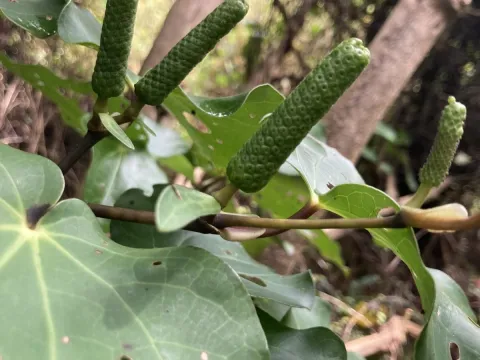
Kawakawa (Piper excelsum) is a prominent member of the Piperaceae family, native to New Zealand. This evergreen shrub or small tree is highly valued for its cultural and medicinal significance. Botanically, it is distinct for its heart-shaped leaves, which are often perforated by insects, a trait frequently observed in healthy specimens growing in the wild.
The plant originates from the coastal and lowland forests of New Zealand. Its natural distribution is largely tied to regions with consistent rainfall and high humidity. It thrives in sheltered forest environments, often acting as an understory species that requires protection from extreme temperature fluctuations and direct exposure to heavy winds.
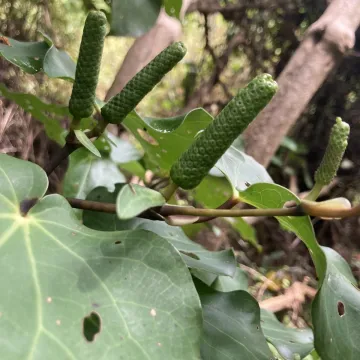
Key botanical features of Piper excelsum include brittle, jointed stems and dark, glossy foliage that emits a peppery aroma when crushed. The inflorescence consists of small, upright, spike-like flowers that eventually produce tiny, clustered fruits. These fruits are an essential food source for native bird species, which also assist in the distribution of seeds.
Regarding agronomic requirements, the plant demands well-draining, humus-rich soil. It is particularly sensitive to soil compaction and waterlogging. In terms of cultivation, maintaining a balance between humidity and soil aeration is crucial. It is typically propagated via cuttings, which root effectively in a controlled, warm, and shaded environment.
The primary utility of the plant lies in its ethnobotanical applications. Traditionally, it has been used for its analgesic and anti-inflammatory properties, particularly in treating digestive and skin conditions. Common horticultural challenges include protection against sucking insects, such as aphids, and preventing fungal pathogens that thrive in high-humidity cultivation settings.
Photo gallery