Black pepper
Piper nigrum L.
Description
Black pepper (Piper nigrum L.) is a perennial woody vine belonging to the Piperaceae family. It is arguably the most significant spice crop globally, prized for its pungency derived from the chemical compound piperine contained within its drupes.
The plant originates from the Western Ghats of India. Today, it is cultivated extensively throughout the tropical belt, with Vietnam, India, Indonesia, and Brazil being the primary producers. The crop thrives in tropical environments characterized by high humidity, temperatures between 20°C and 30°C, and consistent annual rainfall.
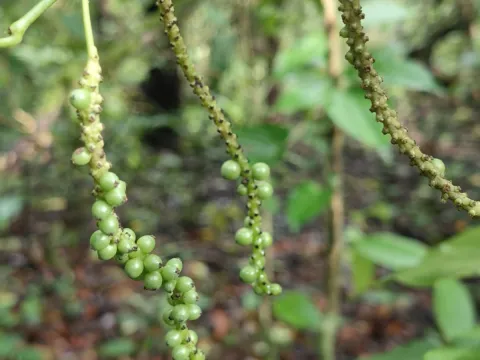
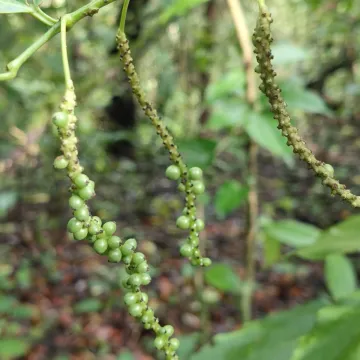
Botanically, Piper nigrum is a climbing vine that utilizes adventitious roots to attach to host trees or artificial trellises. Its leaves are broad, alternate, and glossy green. The small, white flowers are arranged in pendulous spikes, which develop into small fruits that turn from green to red when fully ripe.
Cultivation requires deep, well-drained loamy soils rich in organic matter. Agricultural management involves establishing shade trees for young vines, providing durable supports, and maintaining soil fertility through regular applications of manure and chemical fertilizers. Pruning is essential to maintain plant health and improve yield potential.
- Harvesting timing dictates the final product type.
- Proper post-harvest drying is critical to prevent mold.
- Standardized trellising is mandatory for commercial farms.
The crop is vulnerable to various pathogens, most notably Phytophthora capsici, which causes foot rot. Common pests include the polu beetle and various root-knot nematodes. Integrated pest management (IPM) strategies, including biological control and resistant cultivar selection, are standard practices in modern sustainable pepper production.
Photo gallery