Javanese long pepper
Piper retrofractum
Description
Javanese long pepper (Piper retrofractum) is a perennial tropical vine belonging to the Piperaceae family. It is a significant agricultural crop in Southeast Asian regions, valued globally for its pungent flavor and historical use in traditional medicinal practices and culinary applications.
The plant is native to the tropical forests of Indonesia, Malaysia, and the Philippines. Its natural habitat is characterized by high humidity and consistent tropical temperatures, which are essential for its successful cultivation. Today, it is grown in various tropical climates worldwide that offer similar ecological conditions.
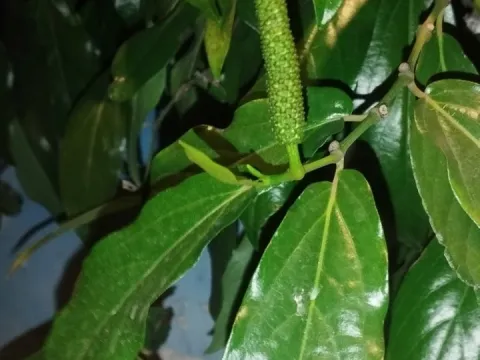
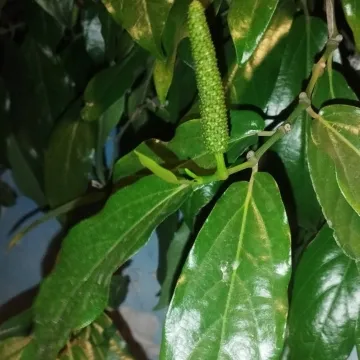
Botanically, this species is a climbing plant that requires support structures to reach optimal growth. The leaves are leathery and elongated, while the fruits appear as small, dense spikes that mature into a deep red color. These spikes contain the pungent compounds that define the plant's economic and commercial value.
Agricultural success depends on providing fertile, well-draining soil rich in organic matter. Farmers typically implement intensive cultivation techniques, ensuring that the vines are provided with proper trellising. The plant is sensitive to waterlogging, so maintaining adequate soil moisture without causing root rot is a critical management task.
Common agricultural threats include fungal root diseases and pest infestations such as nematodes or spider mites, which can be mitigated through integrated pest management. The primary use of the harvest is in the spice market, where the dried spikes are used as a flavoring agent, and in the pharmaceutical industry due to the presence of active piperine compounds.
Photo gallery