Wild Betel
Piper sarmentosum
Description
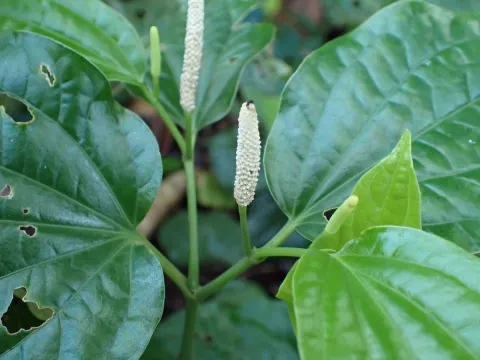
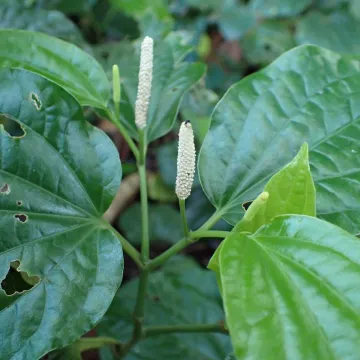
Wild Betel (latin Piper sarmentosum) is a perennial herbaceous plant belonging to the Piperaceae family. It is widely recognized for its heart-shaped leaves, which are frequently used in the culinary traditions of Southeast Asia, often confused with the true betel plant due to their similar appearance and aromatic profile.
The plant originates from the tropical regions of Southeast Asia, including Vietnam, Thailand, and Malaysia. It thrives in humid, shaded environments, naturally occurring in forest understories. As an agricultural crop, it is cultivated in controlled environments, such as greenhouses or shaded garden beds, to replicate its native tropical microclimate.
Botanically, it is a low-growing creeper with stems that root easily at the nodes, allowing it to form dense, ground-covering mats. The leaves are smooth, glossy, and possess a distinct, slightly peppery flavor. Its growth habit allows for multiple harvests per season, as the plant responds vigorously to pruning and trimming of its leafy shoots.
Agrotechnical requirements focus on soil moisture and shade management. The ideal soil is rich in organic matter, slightly acidic, and well-draining to prevent waterlogging. While it requires high moisture, it must be protected from intense sunlight, which can damage the leaf tissue. Consistent irrigation is essential to maintain the texture and flavor of the foliage.
The plant is highly valued for its culinary applications, being a common ingredient in traditional Asian cuisine for salads, stir-fries, and as a wrapper for grilled appetizers. In terms of protection, the primary challenges for farmers include pest control—specifically against snails, slugs, and spider mites—and preventing root rot during high-humidity periods. Proper crop rotation and field hygiene are vital to ensure a healthy yield.
Photo gallery