
Blue ricegrass
Piptatherum coerulescens
Description
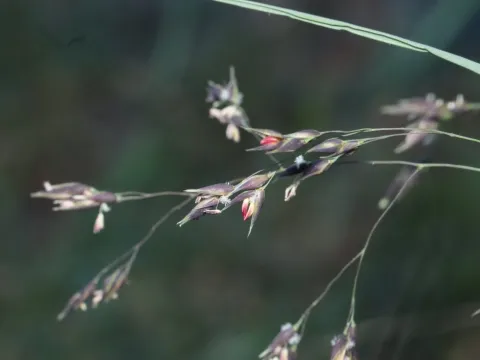
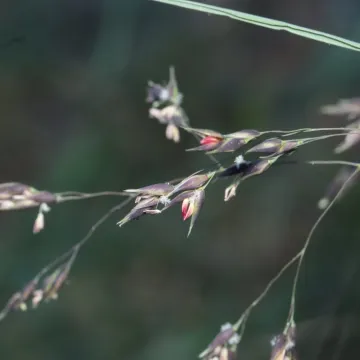
Blue ricegrass (lat. Piptatherum coerulescens) is a perennial grass species belonging to the Poaceae family. Known for its distinct bluish foliage and structural durability, this plant serves as a vital forage resource in semi-arid environments where other traditional forage crops struggle to establish and maintain productivity.
The origin of this species is traced to the Mediterranean region, North Africa, and parts of Western Asia. It thrives naturally in rocky terrains, dry slopes, and steppe habitats. Its evolutionary adaptation to these harsh conditions makes it an excellent candidate for agricultural reclamation of marginal lands and low-input pasture management.
Botanically, the plant grows in upright tufts reaching heights of 40 to 80 centimeters. The leaves are characteristically narrow and exhibit a glaucous or bluish tint. A robust and extensive fibrous root system is its defining feature, allowing the plant to reach deep soil moisture reserves, which is essential for survival during summer heatwaves.
Regarding agrotechnical requirements, Blue ricegrass thrives in well-draining soils, particularly sandy or loamy substrates with neutral to slightly alkaline pH levels. While the plant is drought-tolerant once established, early-stage crop management requires weed control to reduce competition for nutrients. Irrigation is rarely necessary in established stands except for seed production fields.
The primary agricultural application for this grass is as a high-quality forage source for livestock. Its ability to regrow early in the season provides a critical window of green forage for grazing animals during the early spring. It is also highly valued in ecological restoration for stabilizing soil against wind and water erosion in vulnerable landscapes.
- Exceptional drought resistance and heat tolerance.
- High nutritional value when harvested at early growth stages.
- Excellent ground cover for soil erosion prevention.
- Resilience to heavy grazing and trampling by livestock.
Typical plant health challenges include susceptibility to fungal pathogens like rusts if grown in areas with excessive humidity or poor aeration. Common pests, such as aphids and various cereal-eating beetles, may affect crop density. Implementing balanced fertilization and ensuring proper spacing between plants are effective measures to maintain a healthy and productive stand.
Photo gallery