Silkgrass
Pityopsis graminifolia
Description
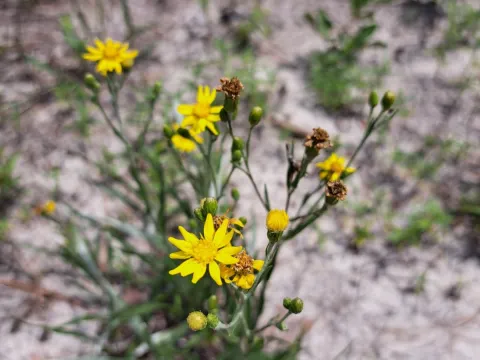
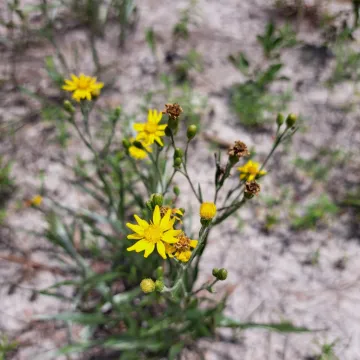
Silkgrass (Pityopsis graminifolia) is a perennial herbaceous plant belonging to the Asteraceae family. Known for its grass-like appearance, it is frequently mistaken for a member of the Poaceae family, but its distinct yellow daisy-like blooms during the late summer and autumn clearly classify it as a member of the aster group.
Native to the southeastern United States, this plant is primarily found in open woodlands, pine barrens, and sandy prairies. Its geographical origin has shaped its physiology, making it highly resilient to nutrient-poor soils and periods of intense heat. It thrives in regions with temperate climates where its drought-tolerance can be fully utilized in agricultural and horticultural settings.
Botanically, Pityopsis graminifolia is characterized by narrow, grass-like leaves that are covered in fine, silvery-white hairs, giving the plant a shimmering appearance. This pubescence is an adaptation to reflect excessive sunlight and reduce water loss. The plant typically reaches a height of 30 to 80 cm, developing a robust root system that helps it withstand harsh environmental conditions.
For successful cultivation, the plant requires well-drained, sandy, or loamy soil with a neutral to acidic pH. It is a sun-loving species that struggles in shaded or overly moist environments. In terms of agronomy, avoid excessive fertilization, as this encourages lush, weak growth that may lead to lodging. Once established, the plant requires very little maintenance, making it an ideal candidate for low-input landscaping.
The primary agricultural and economic use of this plant is within the landscape industry, particularly for sustainable and ecological gardening projects. Its utility includes:
- Xeriscaping and water-wise garden designs.
- Erosion control on sandy, inclined terrains.
- Support for native pollinator populations.
- Integration into wild-style perennial borders.
The plant is relatively resistant to major agricultural pests and diseases. However, the most significant risk to its health is root rot caused by poor soil drainage. Maintaining proper spacing between plants ensures adequate airflow, which is critical in preventing fungal infections during humid spells. Regular monitoring during exceptionally wet seasons is recommended to preserve the integrity of the root crown.
Photo gallery