Amplexicaul plantain
Plantago amplexicaulis
Description
Amplexicaul plantain (Plantago amplexicaulis) is an annual herbaceous plant belonging to the Plantaginaceae family. While often considered a wild species in its native range, it holds potential as a specialty crop, particularly for its chemical profile used in traditional and modern medicine, making it a subject of interest for sustainable arid-land agriculture.
The species is indigenous to the arid and semi-arid regions of the Mediterranean Basin, Northern Africa, and Western Asia. It typically occupies sandy or gravelly soils in desert environments. Its geographical adaptation allows it to flourish in heat-stressed areas where conventional crops often fail due to extreme evapotranspiration rates.
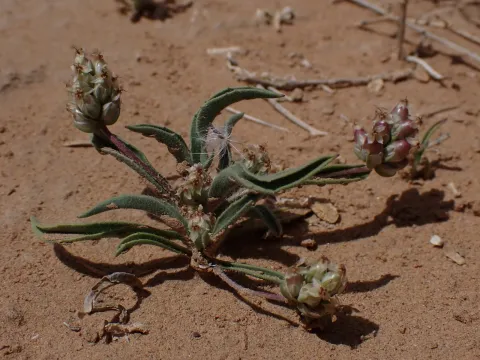
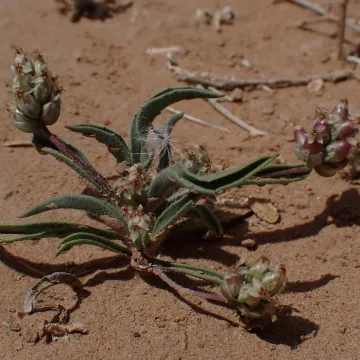
Botanically, the plant is characterized by its amplexicaul leaves—leaves that clasp the stem at their base—and its glandular hairy stems. These features are adaptive mechanisms for reducing water loss. The inflorescence consists of dense, spike-like structures producing numerous seeds, which serve as the primary mode of reproduction and dispersal.
Cultivation requires well-drained, sandy-loam soils with excellent permeability. The plant is highly sensitive to waterlogging, so irrigation must be managed with precision to mimic periodic moisture availability rather than continuous watering. Weed control is essential during the establishment phase, as the plant grows relatively slowly in its initial development stages.
Regarding хозяйственное usage, the species is harvested for its high content of mucilage and phytochemicals, including iridoid glycosides, which possess therapeutic properties. Common agricultural challenges include the management of fungal pathogens, specifically root rot, and protection against pests such as spider mites, which thrive in the same hot and dry microclimates favored by the plant.
Photo gallery