Cretan plantain
Plantago cretica
Description
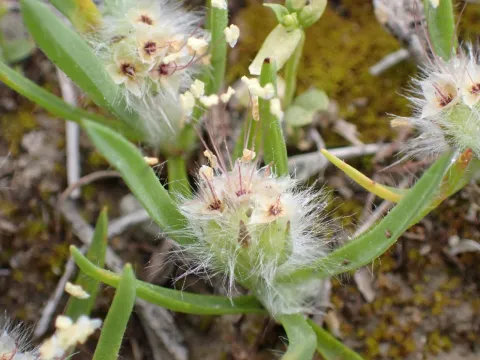
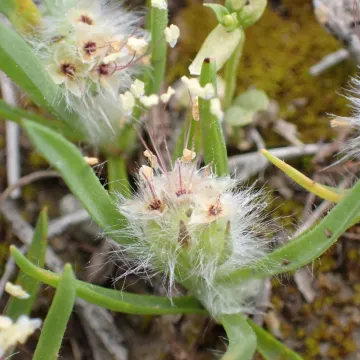
Cretan plantain (lat. Plantago cretica) is an annual herbaceous plant belonging to the Plantaginaceae family. Unlike many of its perennial counterparts within the genus, this specific species exhibits distinct physiological stages, making it a subject of interest for both botanical research and small-scale specialized crop production.
The plant is native to the Mediterranean region, with its primary distribution centered around Crete and adjacent islands. It thrives in arid and semi-arid environments, typically found on stony slopes and open, sunny meadows. Cultivation efforts are focused on replicating these specific environmental conditions to optimize the yield of its medicinal raw materials.
Botanically, the plant features a basal rosette of narrow leaves and upright flowering stalks that produce dense, cylindrical spikes. It is characterized by its significant seed production capacity and the accumulation of specific mucilaginous compounds within the seeds, which are highly valued for their health-promoting properties.
Agricultural management of Cretan plantain requires well-drained, sandy-loam soils with a neutral pH. The crop demands full exposure to sunlight and is highly intolerant of soil compaction and waterlogging. Regular weeding is crucial during the early growth stages, as the plant is a weak competitor and can be easily suppressed by fast-growing annual grasses.
The primary economic value of this crop lies in the pharmaceutical and cosmetic industries. Extracts derived from Plantago cretica are utilized for their wound-healing and anti-inflammatory properties. Furthermore, ongoing agricultural studies evaluate the plant as a resilient cover crop or a supplementary forage component in Mediterranean-style farming systems.
- High drought tolerance once established.
- Excellent performance in alkaline or rocky soils.
- Susceptibility to root rot if drainage is insufficient.
- Pest management focus: controlling aphids during the flowering phase.
Photo gallery