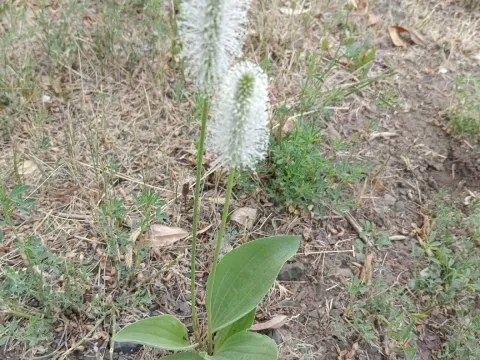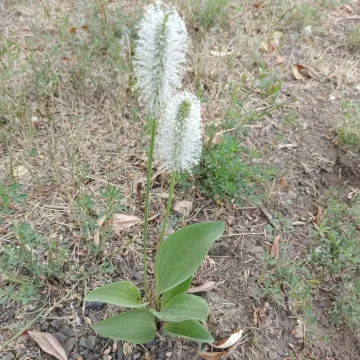
Giant plantain
Plantago maxima
Description
Giant plantain (lat. Plantago maxima) is a perennial herbaceous plant belonging to the family Plantaginaceae. It is distinguished from other species by its significantly larger foliage and robust root system, making it an essential subject for agricultural research and large-scale cultivation of medicinal biomass.
The plant originates from temperate zones of Eurasia, primarily inhabiting floodplains, wet meadows, and riverbank ecosystems. Its geographic distribution is tied to areas with consistent soil moisture, which the plant requires to achieve its maximum growth potential and yield of pharmaceutical-grade raw materials.
Botanically, this species is defined by a large rosette of petiolate leaves characterized by prominent parallel venation. The stalks are upright, producing dense cylindrical spikes of flowers. The plant's architecture allows for high biomass production, while its deep-reaching root system provides stability in the substrate.
Agricultural practices for this crop focus on soil moisture management and the enrichment of loamy soils with organic matter. Growers should implement a systematic weed control strategy, as early development stages are sensitive to competition. Planting is typically done in rows to facilitate mechanical harvesting and proper nutrient distribution.
The economic value of this crop is primarily found in the pharmaceutical industry, where its leaves are processed into extracts for healing and anti-inflammatory products. Furthermore, its ability to survive in moist environments makes it an excellent candidate for landscape management and the stabilization of land areas prone to seasonal flooding.
- Preference for humid and nutrient-rich soil types.
- Regular monitoring for fungal infections in humid conditions.
- Mechanical cultivation during the early stages of plant growth.
- High demand for harvest optimization in medicinal production.
Photo gallery