Patagonian plantain
Plantago patagonica
Description
Patagonian plantain (lat. Plantago patagonica) is an annual herbaceous plant belonging to the Plantaginaceae family. While not traditionally grown as a large-scale agricultural crop, it is of great interest for soil conservation and research into drought-adapted flora in semi-arid ecosystems.
The species is native to the Americas, spanning vast regions from western North America down to the arid landscapes of Patagonia in South America. Its natural habitat includes grasslands, deserts, and sandy plains where it thrives in environmental conditions that are otherwise hostile to many other types of vegetation.
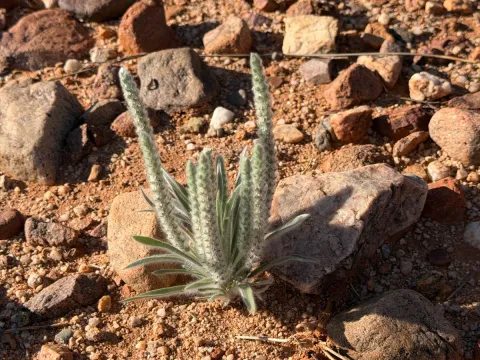
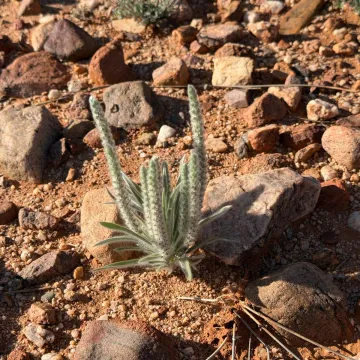
Botanically, it is characterized by a basal rosette of narrow, often pubescent leaves that help minimize transpiration. It produces upright flower stalks topped with dense, cylindrical spikes. The deep taproot system is its primary adaptation, allowing the plant to secure nutrients and limited moisture from deep within the soil profile.
Regarding climate and soil, Plantago patagonica is highly adaptable to poor, sandy, and alkaline soils. It requires full sun exposure and performs best in well-drained environments. Cultivation practices should focus on minimal soil disturbance, as the plant spreads easily via seeds and can become well-established without intensive human intervention.
- Requires high levels of solar radiation
- Thrives in dry, well-drained soil substrates
- Excellent for combating soil erosion
In terms of economic application, the plant is valued in ecological restoration projects to stabilize sandy soils and restore degraded lands. While not a primary crop for consumption, its biological properties are studied for potential pharmaceutical use. Common pests include various leaf-feeding insects, and it can be susceptible to fungal diseases if grown in conditions with poor drainage or excessive stagnant moisture.
Photo gallery