Red-seeded plantain
Plantago rhodosperma
Description
Red-seeded plantain (Plantago rhodosperma) is an annual herbaceous plant belonging to the Plantaginaceae family. Unlike many other plantain species which are perennial, this specific variety operates on a strict annual life cycle, making it a distinct crop for specialized herbal and forage production systems.
The plant is native to North America, primarily found in the central and southern regions of the United States. Its natural habitat includes prairies, meadows, and open fields, where it has evolved to thrive in environments with significant temperature fluctuations and irregular rainfall patterns. This historical adaptation makes it a resilient candidate for cultivation in diverse climates.
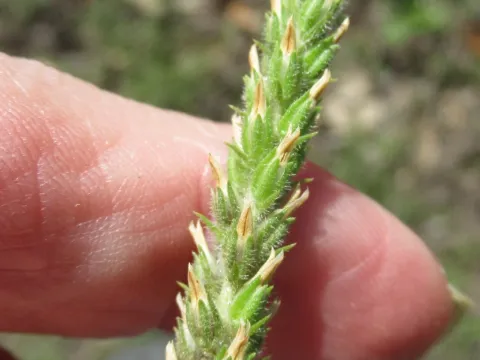
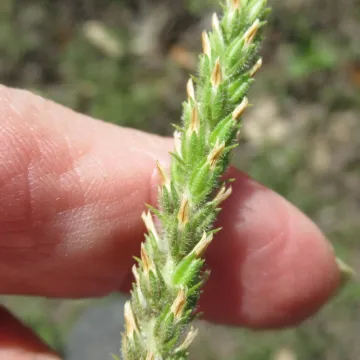
Botanically, the plant presents a basal rosette of lanceolate leaves and produces dense, spike-like inflorescences. Its common name is derived from the distinct red-brown color of its seeds, which are produced in abundance. The plant possesses a robust taproot system that allows it to access deeper soil moisture, providing it with a competitive advantage in drier agricultural settings.
Regarding cultivation requirements, Plantago rhodosperma prefers full sun exposure and well-drained sandy or loamy soils. While it can survive in nutrient-poor conditions, commercial yields are significantly improved by maintaining adequate soil nitrogen levels during the early vegetative phase. Proper spacing is essential to ensure air circulation and prevent moisture-related issues within the dense leaf rosettes.
The agricultural and economic utility of this plant is multifaceted, focusing mainly on the pharmaceutical and dietary sectors. Key uses include:
- Extraction of mucilage for use in dietary fiber supplements.
- Inclusion in high-quality forage blends for small ruminants to improve digestion.
- Use in sustainable landscaping for erosion control on sloped or exposed terrain.
Disease management for red-seeded plantain involves vigilance against common fungal pathogens such as powdery mildew, which can occur during periods of high humidity. Insect pests, including aphids and various leaf-feeding larvae, can occasionally impact crop health. Integrated Pest Management (IPM) practices, such as crop rotation and biological controls, are generally sufficient to manage these threats without the need for intensive chemical applications.
Photo gallery