Salt plantain
Plantago salsa
Description
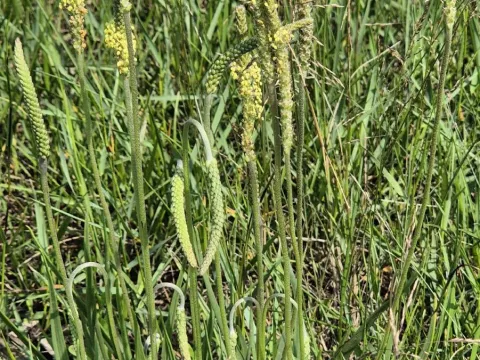
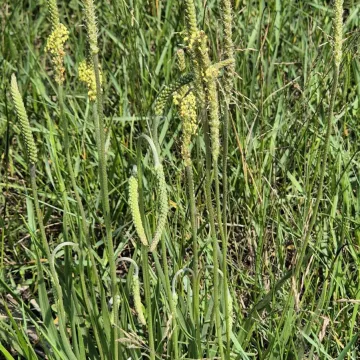
Salt plantain (Plantago salsa) is a perennial herbaceous plant belonging to the family Plantaginaceae. Unlike common plantain species, this plant is an obligate halophyte, specifically evolved to thrive in environments where high salinity levels would be lethal to most standard agricultural crops.
The plant is native to arid regions across Central Asia and the Eurasian steppe zones. Its distribution is strictly limited to saline-alkali soils, salt flats, and the margins of saline lakes. This unique geographic adaptation allows it to dominate areas where soil reclamation for traditional farming is economically or biologically unfeasible.
Botanically, it features succulent leaves that store water and manage osmotic pressure efficiently. Its root system is deep and highly resilient, designed to extract moisture from saline-affected soils. The plant forms dense, low-growing rosettes, which helps in reducing water loss through transpiration and protecting the soil surface from wind erosion.
Regarding agrotechnology, the salt plantain requires no irrigation with fresh water and does not rely on conventional fertilization. It flourishes in full sun and thrives under temperature extremes, from the intense heat of desert summers to cold winter conditions. The main requirement for successful management is selecting a location with a naturally high salt content in the soil profile.
Its primary agricultural use is as a forage plant for grazing livestock, such as camels and sheep, in arid ecosystems. Furthermore, it is being studied as a candidate for the phytoremediation of degraded saline soils. By maintaining a continuous cover on salt flats, the plant helps to improve soil structure and carbon sequestration in environments that would otherwise remain barren.
- Extreme salt tolerance
- High drought resistance
- Soil stabilization properties
- Low input cultivation
- Potential for saline land restoration
Photo gallery