Sardinian plantain
Plantago sarda
Description
Sardinian plantain (lat. Plantago sarda) is a perennial herbaceous plant belonging to the family Plantaginaceae. While not classified as a major commodity crop, this species is highly valued in botanical collections and specialized landscaping due to its unique growth habit and adaptation to extreme environmental conditions.
The plant originates from the Mediterranean region, specifically native to Sardinia, where it thrives in rocky, mountainous areas. Its natural distribution is localized, which makes it a rare subject of study in plant breeding and conservation. It typically colonizes stony substrates, exhibiting high resilience to the nutrient-poor soils found in its native habitat.
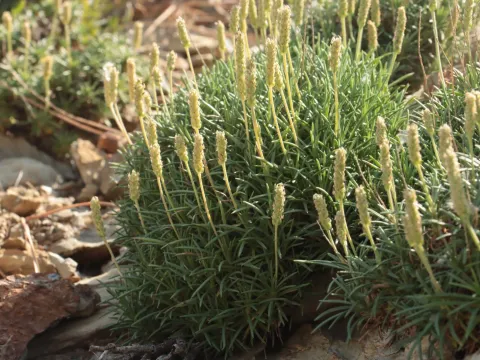
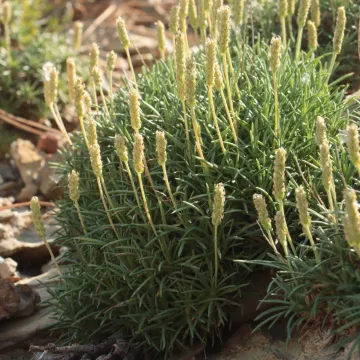
From a botanical perspective, Plantago sarda is defined by its low-growing, rosette-forming structure that helps in heat retention and moisture conservation. The leaves are typically compact and resilient, capable of withstanding prolonged solar exposure. The plant produces short inflorescence spikes, characteristic of the genus, which are well-adapted to wind pollination in open, exposed environments.
Cultivation requires strict adherence to drainage requirements, as the plant is highly susceptible to root decay if waterlogged. The ideal growing medium consists of a mixture of gravel, sand, and a minimal amount of mineral-rich soil. In terms of climate, it performs best in mild, Mediterranean-like environments, avoiding extreme frost or high humidity, which can lead to fungal issues.
The main agricultural and horticultural applications include ornamental use in rock gardens and alpine houses. Due to its slow growth rate, it does not compete with fast-growing cover crops but offers significant value as a low-maintenance ground cover in specific landscape projects. Potential pharmacological research continues to explore the presence of specific bioactive compounds within its tissues.
- Excellent drought tolerance once established.
- Requirement for full sun to maintain structural integrity.
- Susceptibility to rot if planted in heavy or damp soil.
- Low nutrient requirements; fertilization should be sparing.
Photo gallery