Platycerium hillii
Platycerium hillii
Description
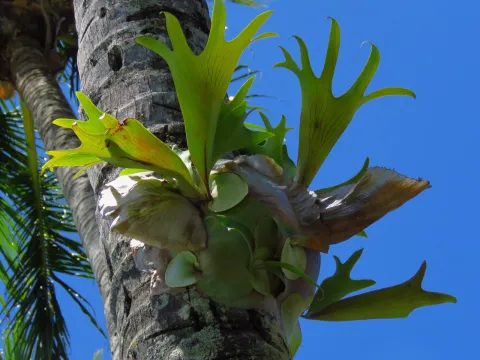
Platycerium hillii is a highly sought-after species of epiphytic fern belonging to the Polypodiaceae family. Known in horticultural circles as a distinct type of staghorn fern, it is widely cultivated for its unique architectural form. Unlike terrestrial plants, this species naturally grows on tree trunks in its native habitat, making it a specialized crop for greenhouse and high-end indoor collections.
The plant originates from the tropical rainforests of Queensland, Australia. Its native range is characterized by warm, humid conditions with consistent rainfall. Due to this evolutionary history, the plant has adapted to utilize its sterile fronds as a biological "basket," which catches falling debris to provide essential nutrients, allowing the plant to thrive without traditional soil contact.
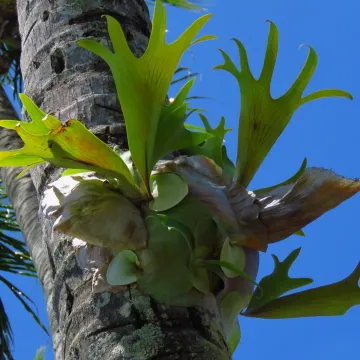
Botanically, Platycerium hillii is recognized by its two distinct types of fronds. The sterile "nest" fronds are shield-like, growing tightly against the mount to support the plant. The fertile fronds, which bear the spore-producing structures (sori), are typically upright and exhibit a characteristic finger-like, dichotomous branching pattern at the tips, which sets this species apart from other Platycerium varieties.
Successful cultivation requires mimicry of the epiphytic environment. The potting medium must be highly porous, typically composed of orchid bark, perlite, and sphagnum moss. Drainage is critical; the medium should never be waterlogged, yet the plant requires high ambient humidity—ideally between 60% and 80%. Temperatures should be kept stable, avoiding any drop below 15 degrees Celsius to maintain healthy growth.
- Bright, indirect light is essential for optimal frond development.
- Watering should be done by soaking the root mass until saturated.
- Avoid spraying water directly into the center of the crown to prevent rot.
- Fertilize lightly during the growing season with balanced liquid nutrients.
Pest management is a routine part of Platycerium husbandry, with scale insects and mealybugs being the most common threats. These pests thrive in poorly ventilated areas with low humidity. Pathological issues are usually limited to fungal crown rot, often triggered by poor drainage or overwatering. Maintaining optimal airflow and cleanliness is essential for the long-term success of this exotic culture.
Photo gallery