Platysace lanceolata
Platysace lanceolata
Description
Platysace lanceolata is a perennial evergreen shrub belonging to the Apiaceae family. Unlike its better-known edible relatives within this family, this species is primarily valued for its botanical uniqueness and its role in the ecosystem of its native Australian habitats, often appearing in woodlands and coastal areas.
Native to Australia, this plant has adapted to diverse soil conditions but thrives best in regions with mild temperatures. In cultivation, it requires a climate that avoids freezing conditions, making it suitable for Mediterranean-style environments where the temperature remains moderate throughout the year.
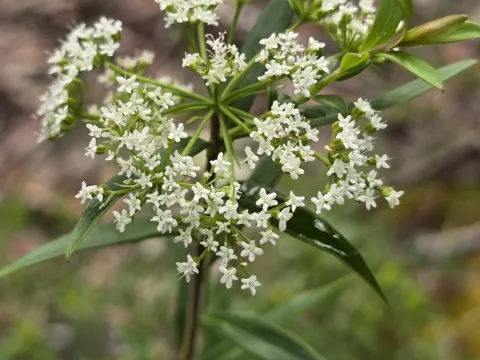
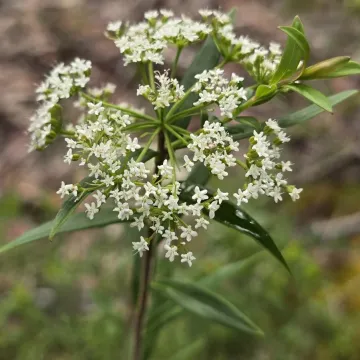
Botanically, it is recognized by its slender, lance-shaped leaves and delicate white or creamy flowers arranged in umbels, a classic trait of the Apiaceae family. The plant maintains a compact growth habit, which makes it an attractive choice for specialized landscaping and ornamental planting schemes.
Successful cultivation of Platysace lanceolata hinges on excellent drainage. The plant is prone to root rot in waterlogged conditions, so it requires well-draining, sandy or loamy soils. Irrigation should be managed carefully, providing enough moisture for growth without saturating the root zone for prolonged periods.
While not a major commercial crop, it is susceptible to typical apiaceous pests and diseases. Gardeners should watch for signs of aphid infestations and fungal pathogens, particularly in environments with high humidity. Proper air circulation and sanitation practices are the best methods to ensure plant health.
Photo gallery