Pleiogynium cerasiferum
Pleiogynium cerasiferum
Description
Pleiogynium cerasiferum, commonly known as the Burdekin plum, is an evergreen tree belonging to the Anacardiaceae family. It is closely related to economically significant crops like the cashew and mango. This tree is valued for its ability to produce substantial yields of fleshy fruits, which have become a traditional food source in its native range and a subject of interest in experimental horticulture.
Native to the coastal regions of Queensland, Australia, this tree thrives in tropical and subtropical environments. It typically grows in rainforest margins and riverine corridors. Its distribution is limited to areas where temperatures remain high throughout the year, as it does not possess significant frost tolerance, making it restricted to specific zones for commercial or home orchard cultivation.
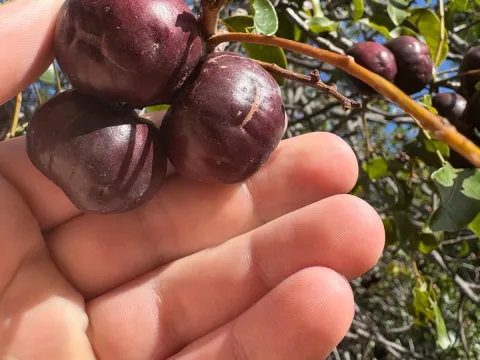
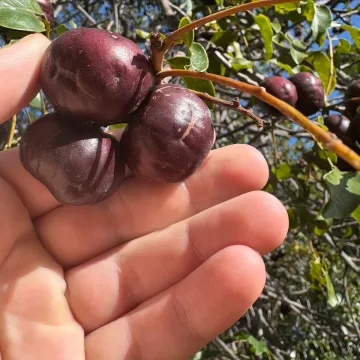
Botanically, the Burdekin plum is a robust tree characterized by a dense, spreading canopy of dark green, compound leaves. The fruits are drupes that develop from inconspicuous flowers. Upon ripening, they transition from a greenish hue to a deep purple or near-black color. The texture is firm, and the flavor is complex, often becoming more palatable after the fruit is harvested and allowed to soften for a few days.
Cultivation requires well-drained, nutrient-rich soil to achieve optimal growth. While the tree is moderately drought-tolerant once established, supplemental irrigation during the flowering and fruit-set stages is recommended to maximize yield. It prefers full sun exposure, which helps maintain the structural integrity of the canopy and encourages a more consistent fruiting cycle. Pruning is essential for managing the tree's height in smaller orchard settings.
The primary use of Pleiogynium cerasiferum is in food production. The fruits are traditionally processed into jams, jellies, and savory sauces, often used as a condiment. Beyond its culinary application, the tree serves as an excellent shade provider and provides essential habitat and food sources for various bird species and arboreal mammals, contributing significantly to local biodiversity.
- Major pests: Scale insects, fruit-boring larvae.
- Main diseases: Root rot in waterlogged soils, leaf spot fungi.
- Management: Integrated Pest Management (IPM) practices, controlled watering.
Agricultural management primarily involves monitoring for common insect infestations that target the developing fruits. Soil health is critical, as stagnant water can lead to root pathogens that severely weaken the tree. By providing adequate space between plantings and ensuring proper air circulation within the canopy, producers can successfully manage the health of this hardy and productive tropical fruit species.
Photo gallery