Austrian lovage
Pleurospermum austriacum
Description
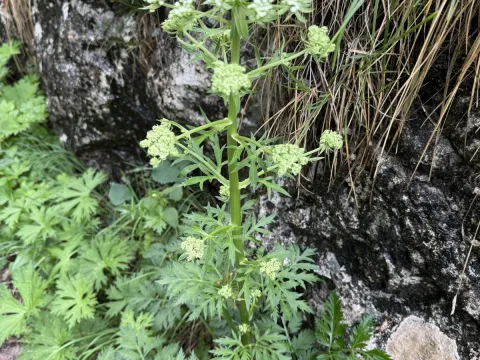
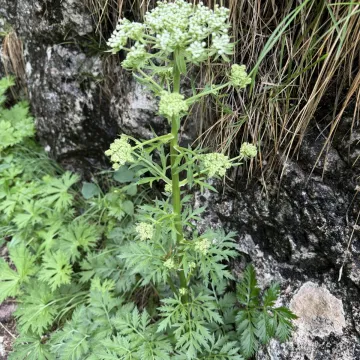
Austrian lovage (Pleurospermum austriacum) is a robust perennial plant belonging to the family Apiaceae. It is characterized by a tall, hollow, and ribbed stem that can reach heights of up to 1.5 meters. The leaves are large and intricately dissected, forming a basal rosette before the plant produces its complex umbel inflorescences featuring small, whitish-green flowers.
The native range of this species extends across the mountainous regions and forests of Central and Eastern Europe. It is a plant that thrives in cool, moist environments, often found in subalpine meadows or sheltered forest edges. Its natural habitat dictates specific requirements for cultivation, focusing on site selection that provides protection from intense, direct solar radiation.
Regarding soil and climate, Austrian lovage prefers deep, nutrient-rich, and slightly moist soils. Drainage is essential, as the roots are sensitive to waterlogging despite the plant's high moisture requirements. It performs best in temperate climates with well-defined seasons and high humidity levels during the active growth period in late spring and early summer.
Agronomic management involves careful weed control, particularly during the first year, as growth is relatively slow. Propagation is primarily achieved through seeds, which often require a period of cold stratification to break dormancy. Once established, the plant requires minimal maintenance, such as spring mulching to preserve moisture and occasional organic fertilization to support leaf biomass production.
Hostile pests and diseases for this crop include common umbelliferous pathogens like fungal blights or aphids, which can be managed with integrated pest management strategies. While not a major commercial crop, it is of interest for specialty botanical gardens and occasional use in phytotherapy. Its ecological value lies in its ability to support local insect populations as a nectar source.
- Family: Apiaceae
- Native habitat: Mountains of Europe
- Plant height: 80–150 cm
- Propagation: Seed stratification
- Main requirement: Semi-shaded, moist site
Photo gallery