Plicosepalus acaciae
Plicosepalus acaciae
Description
Plicosepalus acaciae is a notable perennial hemiparasitic shrub belonging to the Loranthaceae family. Unlike holoparasites, this plant retains its chlorophyll and can photosynthesize, yet it relies on its host for water and essential minerals, which it extracts via sophisticated root structures known as haustoria that penetrate the host's vascular tissue.
The plant originates from the arid landscapes of Africa and the Middle East, thriving in environments characterized by high solar radiation and severe water scarcity. It has evolved to specialize in parasitizing various woody species, most notably those within the Acacia genus, which are widespread in these ecological zones.
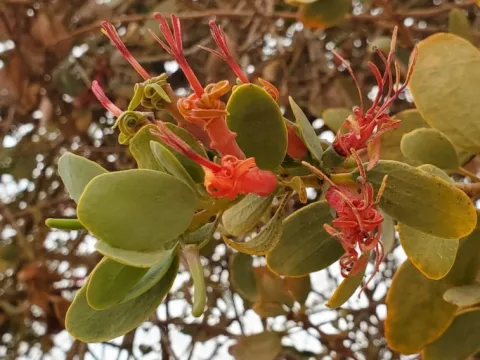
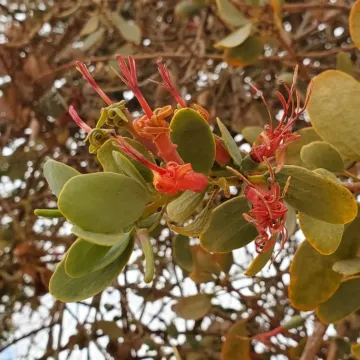
Botanically, the plant displays succulent features, with thick, leathery leaves designed to minimize transpiration. Its vibrant, often reddish flowers are specifically adapted to attract avian pollinators. These birds are critical for the plant's life cycle, as they ingest the fruits and distribute the sticky, resilient seeds onto new branches through their droppings.
In the context of land management, Plicosepalus acaciae is generally categorized as a nuisance rather than an agricultural crop. Because it siphons resources from host trees, it can significantly weaken the vitality of acacia stands, which are often vital for local pastoral communities as a source of browse and shade for livestock.
Effective management and control measures include:
- Systematic manual removal of parasitic clusters from the canopy.
- Pruning of heavily infested limbs to prevent spread.
- Improving overall tree health to enhance natural defenses against infestation.
The ecological importance of this plant is significant within its native range. While it acts as a competitor to its host, it serves as an important resource for desert-dwelling fauna. The flowers provide nectar during harsh seasons, and the plant itself contributes to the complex web of interactions that maintain biodiversity in fragile arid environments.
Photo gallery