Saltmarsh fleabane
Pluchea odorata
Description
Saltmarsh fleabane (lat. Pluchea odorata) is a perennial shrub belonging to the Asteraceae family. Recognized for its resilience, this species thrives in saline or brackish environments, making it a unique botanical subject for ecological studies and specific agricultural land reclamation projects.
The plant originates from the tropical and subtropical regions of the Americas, spanning from the United States to the Caribbean and South America. It typically inhabits salt marshes, coastal dunes, and wetlands. Its natural ability to tolerate varying soil salt concentrations allows it to survive in conditions where most crops would fail.
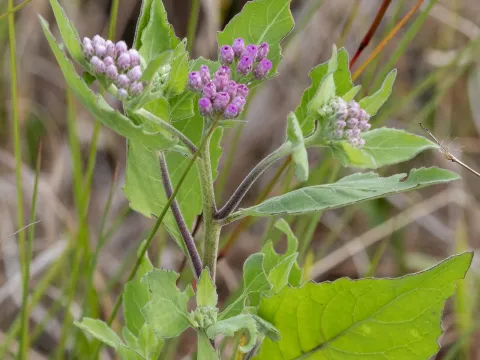
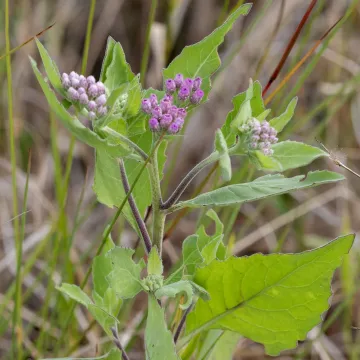
Botanically, Pluchea odorata is characterized by its woody base, simple alternate leaves, and distinct pinkish-purple flower heads. These flower clusters are arranged in corymbs at the terminal ends of the stems. The plant is noted for its aromatic foliage, which is often described as pungent, owing to the volatile oils produced by its glandular hairs.
Cultivation requirements for saltmarsh fleabane are relatively straightforward, provided the location mimics its natural habitat. It performs best in full sun and requires soil that can maintain moisture. While it is tolerant of salinity, it also adapts well to standard garden soil. Propagation is usually achieved through seed dispersal or stem cuttings, which root readily in humid environments.
Common uses of the crop include:
- Coastal restoration and shoreline stabilization.
- Ornamental landscaping for gardens with saline soil conditions.
- Use in folk medicine for its purported anti-inflammatory properties.
- Pollinator support, serving as a nectar source for various native insects.
Management of the plant focuses on pruning to control size and prevent the buildup of fungal pathogens in dense stands. While generally robust, the plant can be susceptible to aphids and whiteflies, which may require monitoring. Proper spacing and ensuring adequate airflow are key practices for maintaining plant health in large-scale plantings.
Photo gallery