European leadwort
Plumbago europaea
Description
European leadwort (Plumbago europaea) is a perennial herbaceous plant belonging to the Plumbaginaceae family. It is a distinctive species known for its resilience and historical use in traditional medicine, where its roots and leaves were utilized for their pharmacological properties, despite the plant's potential toxicity.
Originating from the Mediterranean region, the European leadwort thrives across Southern Europe, North Africa, and parts of Western Asia. It is naturally adapted to rugged environments, frequently appearing on limestone-rich slopes, rocky outcrops, and disturbed dry lands. This adaptability makes it an interesting subject for study in specialized horticultural and botanical collections.
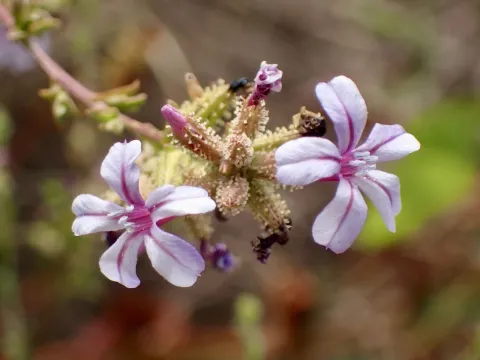
Botanically, the plant is characterized by a branched, stiff stem that can grow up to 90 cm in height. Its leaves are alternate, ovate to oblong, and often have a rough texture. The inflorescences are dense, terminal spikes featuring numerous small, light purple or pinkish flowers that bloom from mid-summer into early autumn, providing a long-lasting aesthetic appeal.
Cultivation requirements for Plumbago europaea emphasize the need for well-drained, alkaline, or neutral soils and ample exposure to sunlight. The plant is highly drought-tolerant once established, making it suitable for xeriscaping in Mediterranean climates. Agronomic care is relatively simple, requiring minimal intervention, but farmers must prioritize keeping the soil dry during the dormant winter months to prevent root rot.
- Requires full sun exposure for optimal growth
- Needs well-draining soil to avoid fungal pathogens
- Minimal fertilization is necessary for established stands
- Protection from excessive winter moisture is essential
Regarding pest and disease management, the European leadwort is generally hardy but remains susceptible to standard pests such as aphids and spider mites during periods of drought stress. Root rot, caused by over-irrigation, is the primary threat to plant longevity. Due to the presence of plumbagin, a chemical compound with significant bioactivity, any agricultural use of this plant is strictly for scientific or medicinal research purposes rather than commercial food production.
Photo gallery