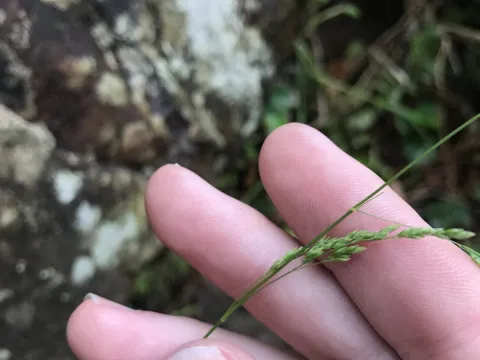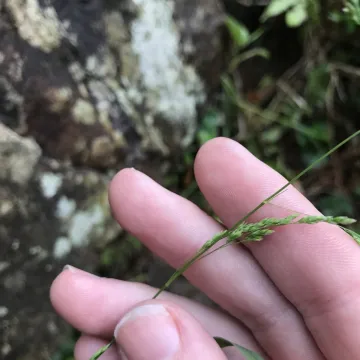

White-tipped bluegrass
Poa acroleuca
Description
White-tipped bluegrass (Latin: Poa acroleuca) is a perennial grass species belonging to the Poaceae family. It is recognized in agronomy for its adaptability and nutritional value, making it a valuable component of pasture ecosystems and livestock forage systems.
The plant originates from East Asia, including regions of Japan, Korea, and China. It thrives in temperate, moist environments and is commonly found in mountainous areas and forest margins. Its natural distribution demonstrates a strong capacity for surviving in varying altitude zones, contributing to its resilience in different agricultural environments.
Botanically, this species is characterized by its slender leaves with distinctively light-colored tips, which provide its common name. The plant grows in dense tufts and features a delicate, spreading panicle during the flowering stage. Its fibrous root system is highly effective at stabilizing soil, which adds an ecological benefit to its primary role as a grazing crop.
In terms of cultivation, white-tipped bluegrass performs best in fertile, well-drained loamy soils. It requires adequate precipitation and shows a moderate tolerance for shade, which is beneficial in silvopasture setups. Standard agricultural practice involves preparing a fine seedbed and ensuring proper moisture levels during the germination phase to support dense stand establishment.
The primary economic use of this grass is for livestock feed, both as fresh forage in pastures and as harvested hay. It is appreciated by farmers for its palatable leaves and ability to recover quickly after being grazed or mowed. Beyond agriculture, it serves as an excellent ground cover for landscape conservation, helping to control soil erosion on slopes.
- Excellent nutritional profile for ruminants.
- High tolerance to repeated mowing or grazing.
- Strong root system for erosion control.
- Winter hardiness in temperate climates.
The health of the crop can be compromised by typical grass diseases such as rust fungi and powdery mildew, particularly in conditions of high humidity and poor ventilation. Common pests include aphids and various soil-dwelling larvae. Integrated pest management, focusing on proper soil drainage and seasonal crop monitoring, is the most effective way to maintain healthy yields.
Photo gallery