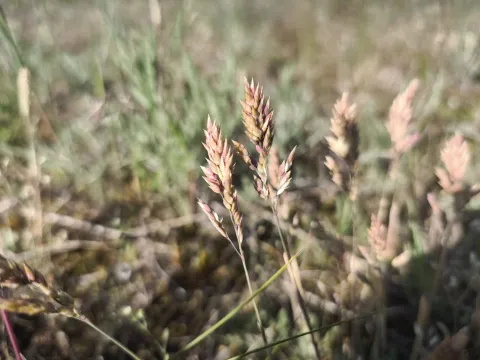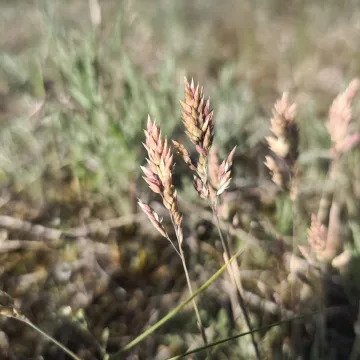
Baden bluegrass
Poa badensis
Description
Baden bluegrass (Poa badensis) is a perennial grass species belonging to the family Poaceae. As a hardy plant native to central and eastern European steppes, it is valued for its unique ability to survive in harsh environmental conditions, such as high-altitude slopes or areas with poor soil quality, where other forage grasses often fail.
The geographic distribution of Baden bluegrass is centered on rocky, calcareous habitats across Europe. It thrives in continental climates with distinct seasonal temperature swings and periodic droughts. Its ecological niche makes it an interesting candidate for biodiversity projects and sustainable pasture development in marginal lands.
Botanically, this grass forms dense, compact tufts with narrow, often grayish-green leaves. Its architecture is an evolutionary response to water scarcity and intense solar radiation. The deep, well-developed root system provides excellent soil binding properties, which makes it highly effective for preventing soil erosion on steep agricultural slopes.
Agricultural requirements for Baden bluegrass prioritize well-drained, alkaline, or neutral soils. It is sensitive to waterlogging and soil compaction, necessitating careful site selection. In terms of agronomy, the species requires minimal input but benefits from controlled grazing intervals to ensure it replenishes its root reserves throughout the growing season.
The primary economic use of this species is in long-term pasture and meadow systems. It provides high-quality forage during the early growing stages, making it an excellent component for sustainable livestock grazing in drier regions. Furthermore, its ability to thrive in poor soils makes it a critical plant for land restoration and landscape conservation initiatives.
- Exceptional drought resistance
- High adaptation to calcareous and poor soils
- Excellent soil stabilization properties
- Persistence in semi-arid conditions
Common health issues include powdery mildew and rusts, which can be managed by avoiding over-seeding and maintaining proper field drainage. Pest threats primarily include grain weevils and stem-boring insects, which can affect the yield of seed-producing stands. Integrated pest management and sustainable grazing rotations are the standard practices for maintaining healthy plant populations.
Photo gallery