Broad-leaved meadow-grass
Poa chaixii
Description
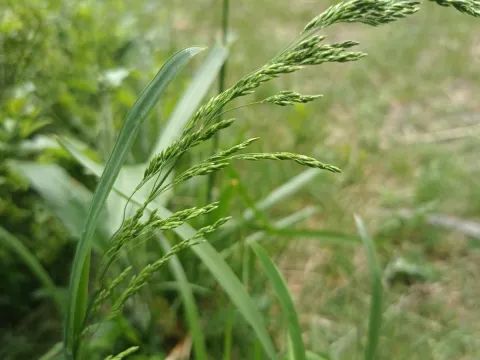
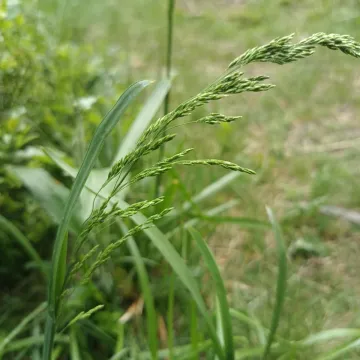
Broad-leaved meadow-grass (Latin: Poa chaixii) is a robust perennial grass belonging to the Poaceae family. Recognized for its structural resilience and nutritional value, this species serves as a fundamental component in many cool-temperate grassland ecosystems and agricultural forage systems.
Originating primarily from the mountainous regions of Central and Southern Europe, the species is naturally adapted to moist environments, including meadow slopes and forest fringes. Its introduction to agricultural practices has allowed farmers to utilize marginal, high-moisture lands for productive biomass and grazing purposes.
Botanically, Poa chaixii is distinguished by its broad, bright green foliage and a loose, pyramidal panicle that appears in late spring. The plant possesses a hardy, fibrous root system that provides excellent soil stabilization and high tolerance to cold climates, making it an ideal candidate for long-term pasture development.
Agronomically, the crop performs best in well-drained, fertile soils with consistent moisture levels. While it tolerates partial shade better than most meadow grasses, it achieves maximum productivity in open sites under intensive management. Key agronomic practices involve balanced NPK fertilization and ensuring a cutting frequency that prevents the grass from becoming overly lignified.
The economic significance of Poa chaixii is multifaceted, serving the agricultural industry through:
- high-quality forage production for ruminants;
- establishment of persistent, high-density pastures;
- reclamation and soil erosion prevention projects;
- inclusion in complex grass-legume ley mixtures to increase grazing efficiency.
Like many species in the genus Poa, this plant can be susceptible to fungal diseases such as rust (Puccinia spp.) and leaf spot, particularly in humid or stagnant air conditions. Common pests include various stem-boring insects and aphids, which are typically managed through proper stand rotation and timely harvesting, which disrupts the pest life cycle and maintains field hygiene.
Photo gallery