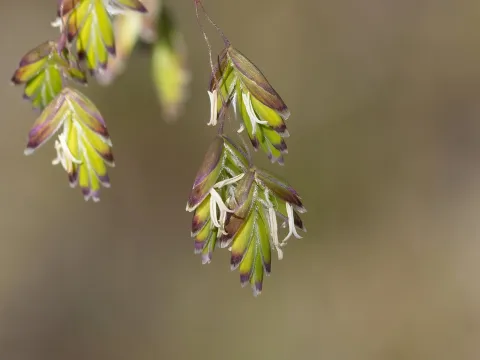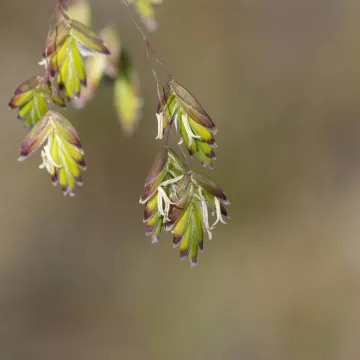
Drummond's bluegrass
Poa drummondiana
Description
Drummond's bluegrass (Poa drummondiana) is a perennial grass species belonging to the Poaceae family. Recognized for its resilience, this plant is an essential component of native pastures and rangelands, particularly within its natural distribution range.
The species originates from Australia and is distributed across diverse landscapes, ranging from woodland edges to arid open plains. Its natural adaptation to fluctuating climate conditions makes it a subject of interest for sustainable agricultural practices in similar temperate and semi-arid environments.
Botanically, it forms dense tussocks, which is a key survival strategy in environments where moisture is inconsistent. The narrow, often involute leaves and fine, fibrous root system help the plant manage evapotranspiration efficiently while maintaining ground cover during seasonal droughts.
The agronomic requirements for Poa drummondiana include well-drained soil and adequate light exposure. As a drought-tolerant species, it does not require intensive irrigation, making it a low-input forage crop. Management should prioritize the prevention of overgrazing to ensure the longevity and productivity of the sward.
In agricultural practice, its primary use is as livestock fodder. Due to its nutritional profile, it is highly valued in pastoral farming. While generally robust, like other Poaceae, it can be susceptible to typical leaf rusts or aphid infestations if environmental stress is extreme, requiring integrated pest management strategies.
- Drought tolerance
- High biomass quality
- Soil erosion control
- Longevity in pastoral systems
Photo gallery