Tussock grass
Poa flabellata
Description
Tussock grass (Poa flabellata) is a perennial grass species within the Poaceae family. It is renowned for its distinct growth habit, forming large, dense clumps or "tussocks" that can reach significant heights. This species is highly valued for its resilience, making it a critical biological resource in regions where harsh environmental conditions limit the growth of standard agricultural crops.
Originating from the subantarctic islands and the coastal regions of the Southern Hemisphere, this plant is naturally adapted to extreme wind exposure and low temperatures. It is a dominant species in its native range, effectively buffering the impact of saline ocean sprays and poor nutrient conditions in the soil. Its ability to colonize rugged landscapes has made it a subject of interest for ecological restoration projects globally.
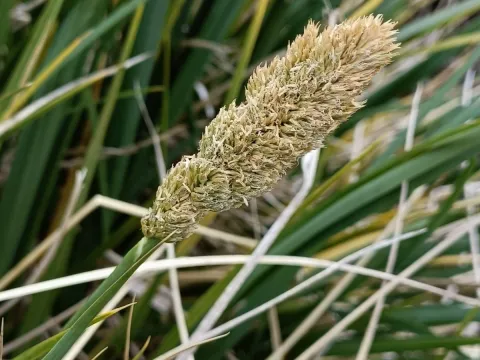
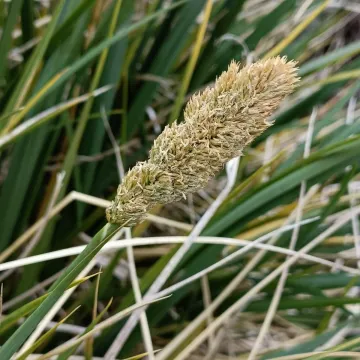
Botanically, Poa flabellata features rigid, folded leaf blades and a deep, robust root system. The plant architecture is designed for durability, with leaves that are tough and resilient to physical breakage by strong winds. The inflorescence is a dense, contracted panicle, providing a high output of seeds which facilitates natural spreading in open, unpopulated areas.
To successfully cultivate this grass, one must provide well-drained but consistently moist soil conditions. The plant is photophilous, requiring full sunlight to maintain the integrity of its dense tussock structure. In agricultural practice, maintaining soil fertility—particularly nitrogen levels—is crucial, as this grass is traditionally adapted to soils enriched by maritime bird guano in its natural habitat.
The primary agricultural and economic uses include:
- Stabilization of sandy coastal dunes and eroded landscapes.
- Provision of high-quality forage for grazing livestock in cold, maritime climates.
- Utilization as a natural windbreak for sheltered crop production.
- Restoration of damaged coastal ecosystems.
Photo gallery