Wavy meadow-grass
Poa laxa
Description
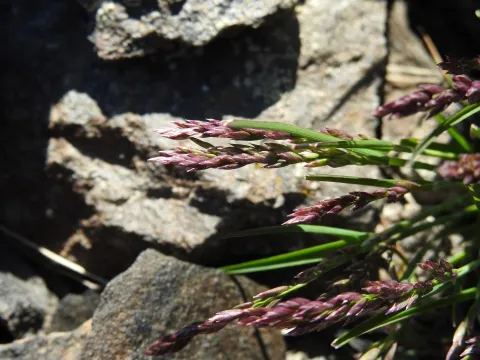
Wavy meadow-grass (Poa laxa) is a perennial grass species belonging to the Poaceae family. Unlike lowland grasses, this species has evolved specifically to thrive in the challenging environments of alpine zones, showcasing remarkable resilience to cold and sparse soils.
The native range of this species covers major mountain chains in Europe, notably the Alps, Pyrenees, and Carpathians. It is typically found in rock crevices, stony slopes, and alpine screes, where it functions as a pioneer species capable of colonizing nutrient-poor substrates.
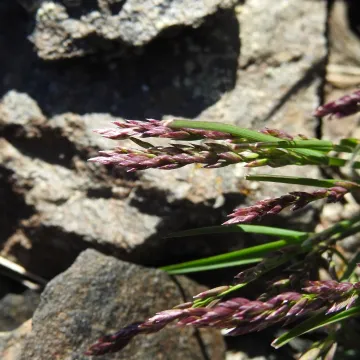
Botanically, Poa laxa is recognized by its loose tufts and relatively short, slender culms. The leaves are narrow, often with a slightly glaucous or bluish-green tint, which helps in thermal regulation. The root system is finely branched, providing essential anchorage in rocky and unstable ground.
Climatic requirements are strict: the grass necessitates cool, moist conditions with minimal heat stress. It is not suitable for cultivation in typical agricultural fields due to its inability to compete with faster-growing mesophytic grasses and its specific requirement for high-altitude microclimates.
In terms of usage, the plant serves primarily as an ecological stabilizer for mountain landscapes. It plays a critical role in preventing soil erosion on steep slopes. While not a commercial forage crop, its genetic potential is of great interest for breeding programs focused on cold-hardy turf and forage varieties.
- High cold tolerance
- Exceptional adaptation to rocky substrates
- Slow growth rate under optimal conditions
- Limited competition capacity
- Vital for alpine habitat stability
Photo gallery