Maniototo bluegrass
Poa maniototo
Description
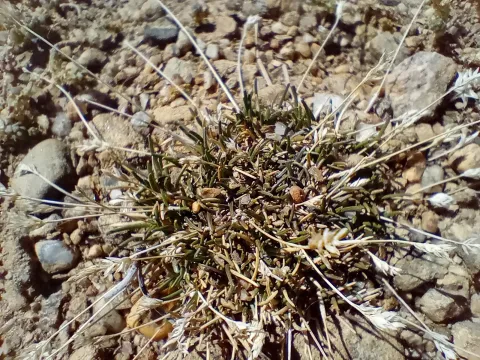
Maniototo bluegrass (Poa maniototo) is a perennial grass species belonging to the Poaceae family. Known for its remarkable resilience, this plant is a specialized species that occupies a unique niche within its natural ecosystem, distinguishing it from conventional agricultural forage grasses.
The plant originates from New Zealand, specifically the arid basins of the South Island. Its natural habitat is characterized by extreme environmental stress, including high solar radiation, significant frost events, and very low annual rainfall. These factors have made it a subject of scientific study for climate-resilient agriculture.
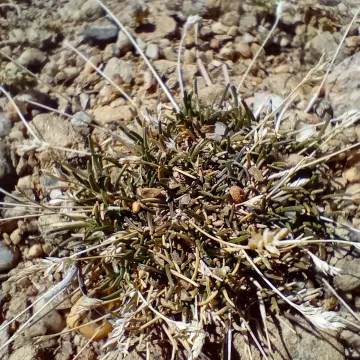
Botanically, Poa maniototo is a small, tufted grass. It features narrow, often rigid leaves that are anatomically optimized to prevent water loss. Its root system is exceptionally efficient at extracting moisture from rocky or sandy substrates, which allows the plant to thrive where larger species would fail.
Agricultural requirements for this species focus on well-drained, nutrient-poor, or rocky soils. It is highly sensitive to waterlogging, which can cause root rot. In an agricultural setting, it is best suited for low-input systems where its natural drought tolerance can be leveraged to maintain ground cover in challenging environments.
Potential agricultural applications include its use as a hardy ground cover or as a genetic source for breeding more resilient forage varieties. While it does not face severe pressure from common pests in its natural habitat, proper management must ensure that weed competition is kept to a minimum to allow for successful establishment.
Photo gallery