Remote bluegrass
Poa remota
Description
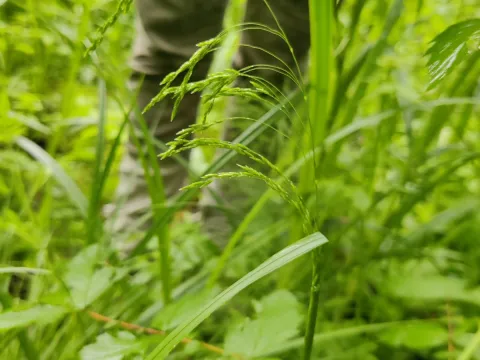
Remote bluegrass (Poa remota) is a perennial herbaceous grass species belonging to the family Poaceae. Unlike common meadow grasses, this species is uniquely adapted to specific ecological niches, thriving in moist, shaded environments. Within agricultural and botanical contexts, it is recognized for its role in maintaining biodiversity in woodland pastures and semi-natural forage systems.
The native distribution of this plant includes the forest zones of Eurasia, ranging from Central Europe to Eastern Siberia and the Far East. It typically occupies riparian habitats, damp alder forests, and shady meadow edges. This specific geographic and environmental affinity dictates its suitability for cultivation in cooler, northern regions where high soil moisture is consistent throughout the growing season.
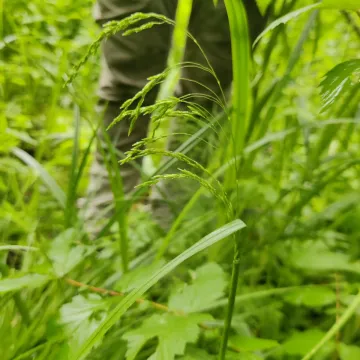
Botanically, Poa remota is characterized by a loose-tussock growth habit with slender, often nodding stems that can grow up to 100 cm in height. Its foliage is soft and light green, consisting of narrow, linear blades. The inflorescence is a loose, open panicle, which distinguishes it from more compact bluegrass varieties. The root system is moderately developed, allowing for slow expansion in nutrient-rich, damp soils.
In terms of agricultural requirements, Remote bluegrass demands fertile, loam-based soils with reliable moisture retention. It is highly sensitive to direct sunlight and prolonged drought, making shaded or semi-shaded locations essential for biomass production. Effective agrotechnical management includes maintaining appropriate soil moisture levels and avoiding overgrazing, which can easily destabilize the population of this delicate grass.
Economically, the species serves as a valuable component in forage mixtures for forest-margin grasslands. While it is rarely grown as a monoculture, its nutritional digestibility makes it a desirable plant for cattle grazing. Common challenges include fungal diseases such as leaf rust and powdery mildew, particularly in dense stands with poor air circulation, alongside typical cereal pests like aphids that require proactive monitoring.
Photo gallery