Steppe bluegrass
Poa versicolor
Description
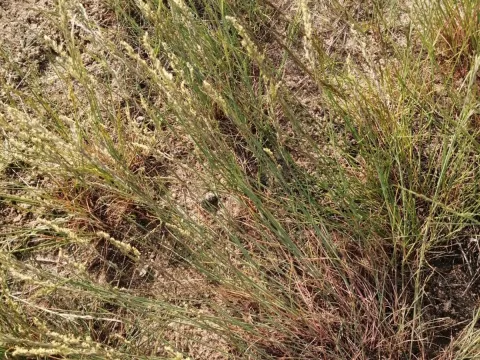
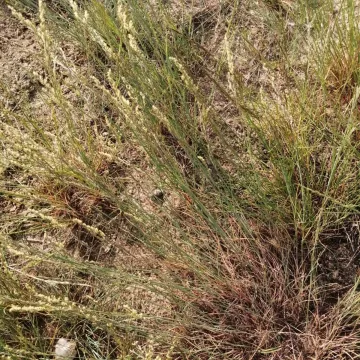
Steppe bluegrass (Poa versicolor) is a perennial grass species belonging to the Poaceae family. This hardy plant is a vital component of steppe ecosystems, well-adapted to the challenging environmental conditions of continental climates found throughout Eurasia.
The native range of Poa versicolor includes the vast steppe and forest-steppe zones stretching across Eastern Europe, Central Asia, and Siberia. It is highly valued for its ability to thrive in regions where annual rainfall is limited and temperature fluctuations between seasons are significant.
Botanically, the plant develops as a bunchgrass with a deep-reaching root system, allowing it to survive periods of drought. Its foliage typically exhibits a glaucous or grey-green coloration, which is an evolutionary adaptation to reduce transpiration. The inflorescence is a panicle, characteristic of many Poa species, which aids in efficient seed dispersal.
Regarding cultivation requirements, steppe bluegrass prefers well-drained soils, including loamy chernozems and chestnut soils. It performs best in open sunny locations and does not tolerate waterlogged conditions or high humidity. Successful agrotechnical management involves moderate grazing pressure to prevent biomass accumulation and maintain the vigor of the sward.
In terms of agricultural use, the primary application of steppe bluegrass is as fodder for livestock, particularly sheep and cattle in arid regions. Beyond its forage value, the species plays an important role in soil conservation and land reclamation, helping to stabilize sandy soils and prevent wind erosion in sensitive steppe areas.
Photo gallery