Aloe-leaved haircap moss
Pogonatum aloides
Description
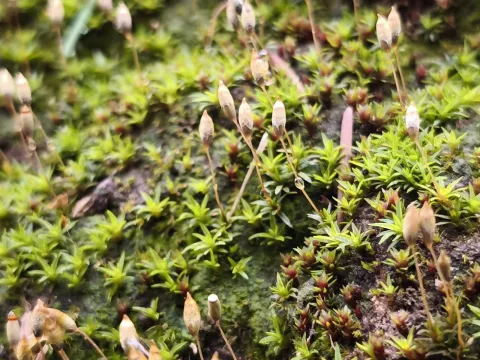
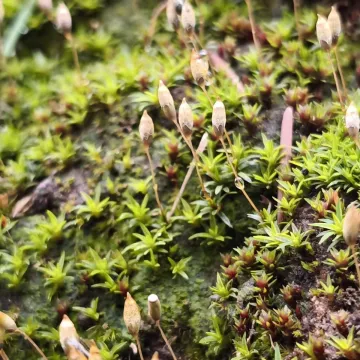
Aloe-leaved haircap moss (Pogonatum aloides) is a perennial bryophyte belonging to the Polytrichaceae family. While not a commercial crop, this plant is ecologically significant as it acts as a pioneer species on bare soil, contributing to the initial stabilization of disturbed terrestrial surfaces.
The species is widely distributed throughout the temperate regions of the Northern Hemisphere, spanning Europe and parts of Asia. It is typically found in habitats such as damp woodland banks, forest roadsides, and open clay-rich soils. Its presence is often an indicator of acidic soil conditions and relatively high moisture levels.
Botanically, it forms small, loose, or dense tufts with stems ranging from 1 to 3 cm in height. A defining feature of the Polytrichaceae family is the presence of longitudinal lamellae on the upper surface of the leaves, which increase the photosynthetic area and allow the moss to thrive in low-light environments.
Climatic and soil requirements are strictly tied to humidity and substrate acidity. The plant thrives in environments that provide consistent moisture and protection from excessive heat. Successful establishment depends on the preservation of the soil's surface structure and protection from complete desiccation during prolonged dry periods.
Its economic importance lies mainly in erosion control on shaded embankments and its use in ecological restoration projects. The species is generally free from common agricultural pests but is highly sensitive to air pollution and chemical pesticides, serving as a biological indicator for the health of forest micro-ecosystems.
Photo gallery