Pogonatum urnigerum
Pogonatum urnigerum
Description
Pogonatum urnigerum is a perennial acrocarpous moss belonging to the Polytrichaceae family. While not an agricultural crop in the commercial sense, it is classified as a significant botanical organism used in environmental restoration and niche landscape architecture for its ability to form dense, protective mats on degraded substrates.
The origin of this species is primarily centered in the temperate and boreal regions of the Northern Hemisphere. It thrives in varied habitats, ranging from sandy banks and gravel pits to alpine scree slopes and forest edges. Its distribution is widespread, demonstrating high adaptability to acidic and nutrient-poor environmental conditions.
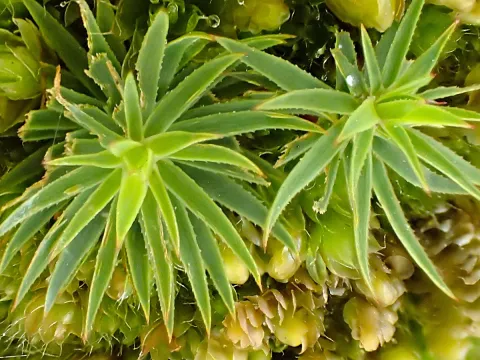
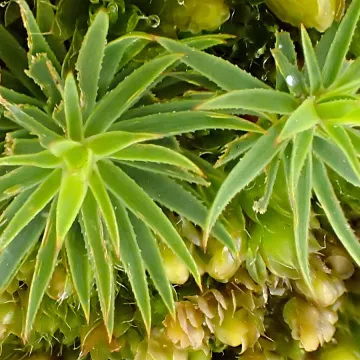
Botanically, Pogonatum urnigerum is distinguished by its bluish-green appearance and upright stems that typically range from 2 to 5 cm in height. The leaves are rigid, linear-lanceolate, and serrated along the margins. The reproductive stage involves the production of urn-shaped capsules, which serve as the primary visual marker for distinguishing this moss from other Polytrichaceae members.
Cultivation requirements for this species include acidic, well-drained soil and a habitat that avoids direct, intense sunlight. In semi-controlled environments, it is essential to mimic natural conditions by providing high air humidity and adequate moisture without saturation. Proper drainage is crucial to ensure the healthy development of its rhizoid system.
The primary utility of this moss is found in soil conservation projects, where it acts as a biological blanket to prevent erosion on embankments and road verges. It is highly resistant to standard agricultural pests and common fungal pathogens, likely due to its unique secondary metabolites. The following features define its ecological role:
- Effective stabilization of loose or sandy substrates.
- High tolerance to nutrient-deficient soil environments.
- Resistance to most common herbivorous insects.
- Capability to thrive in northern climatic zones.
Photo gallery