Sticky spider flower
Polanisia viscosa
Description
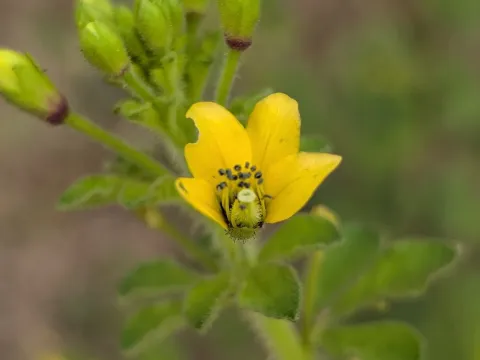
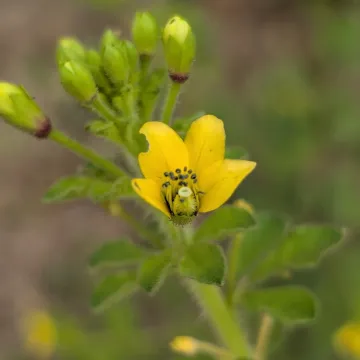
Polanisia viscosa, commonly known as the sticky spider flower, is an annual herbaceous plant belonging to the Capparaceae family. The plant is botanically recognized by its glandular hairs, which secrete a sticky substance, giving it a distinct texture and scent. It is a resilient species often found in warm climate zones across the globe.
The plant is native to tropical and subtropical regions of Asia, Africa, and Australia. Historically, it has been used as a medicinal herb in various traditional systems. Today, it is increasingly studied for its agricultural potential, particularly in areas where soil conditions are poor or water resources are limited, as it exhibits remarkable adaptive traits.
Botanically, Polanisia viscosa features an erect stem growing up to 90 centimeters tall. Its leaves are trifoliate and covered in fine, sticky hairs. The inflorescence consists of yellow flowers that transition into long, narrow capsules (siliques). These capsules effectively disperse numerous tiny seeds once they reach maturity.
For successful production, Polanisia viscosa requires full sun exposure and warm temperatures. It thrives in well-drained, sandy, or loamy soils. Growers should prioritize soil drainage, as the species is highly susceptible to root rot if water stagnation occurs. Regular weeding during the early vegetative stage is essential to ensure a healthy crop yield.
The commercial and practical utility of Polanisia viscosa is significant. It is highly regarded for its medicinal properties, including anti-inflammatory and antiseptic activities. Furthermore, the plant serves as an excellent pollinator attractant and is considered a valuable species for ecological farming. Ongoing research explores the extraction of oils from its seeds for industrial application.
- Excellent tolerance to drought and high ambient temperatures.
- Best grown in areas with neutral to alkaline soil pH.
- Requires protection against waterlogging to prevent root diseases.
- Valuable as a source of bioactive compounds for pharmacological use.
Photo gallery