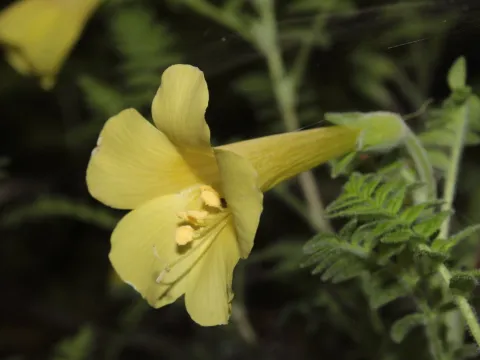
Few-flowered Jacob's ladder
Polemonium pauciflorum
Description
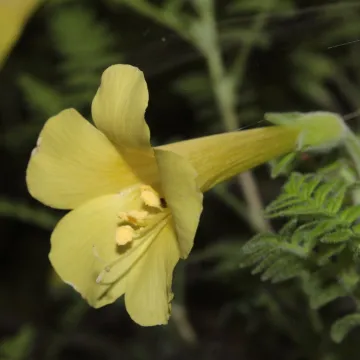
Polemonium pauciflorum, known as the few-flowered Jacob's ladder, is a distinct perennial plant within the Polemoniaceae family. Unlike the more common blue-flowered members of the genus, this species is noted for its unique, tubular, copper-yellow blossoms that provide a refined and sophisticated aesthetic to any garden setting.
Native to the high-altitude regions of Mexico, this plant has adapted to cooler climates and well-drained, rocky substrates. In an agricultural and horticultural context, it is best suited for alpine gardens or cool-climate borders where soil drainage is prioritized, as it avoids the damp conditions that many other perennials might tolerate.
Botanically, the plant develops a rosette of delicate, fern-like pinnate leaves from which slender stems emerge, reaching heights of 30 to 50 centimeters. The flowers, which appear in loose, terminal clusters, possess a subtle scent that contributes to the ecological balance by attracting beneficial pollinators, such as native bees and small insects.
Cultivation requirements necessitate a location with partial shade and well-draining, slightly acidic to neutral soil. Proper maintenance involves consistent moisture during the growing season without allowing water to pool around the crown, and applying organic mulch to regulate root temperature throughout the summer months.
- Light preference: Partial shade to filtered light.
- Propagation: Seeds or careful root division.
- Maintenance: Deadheading to extend flowering window.
- Environmental tolerance: Moderate; requires winter protection in colder zones.
Regarding pest and disease management, the primary risks involve root rot and fungal spotting, typically triggered by excessive humidity or poor soil aeration. Gardeners should monitor for common pests like aphids, employing integrated pest management techniques where possible. Ensuring adequate spacing between plants remains the best preventive measure against the spread of foliage diseases.
Photo gallery