Polycarpaea corymbosa
Polycarpaea corymbosa
Description
Polycarpaea corymbosa is an annual herbaceous plant belonging to the Caryophyllaceae family. In an agricultural context, this plant is recognized for its remarkable hardiness and potential utility in regions where arid conditions limit the growth of traditional crops. It stands out for its ability to thrive in challenging, nutrient-poor environments.
The plant originates from tropical and subtropical zones, spanning Asia, Africa, and parts of Australia and the Americas. It is typically found in open, sunny habitats such as sandy grasslands, rocky outcrops, and cleared agricultural fields. Its broad distribution confirms its adaptability to varied, yet generally warm, climatic regimes.
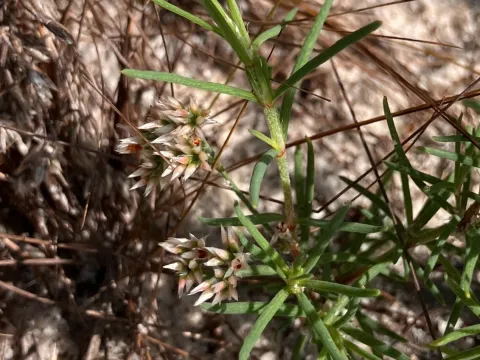
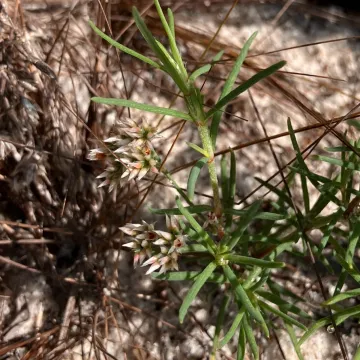
Botanically, the plant features a stem height of approximately 10–30 cm, characterized by narrow, linear leaves arranged in opposite pairs. The most distinct feature is its inflorescence: small, white, silvery flowers clustered in dense, corymb-like heads. This structural design is an evolutionary response to water scarcity and intense solar radiation.
Regarding agrotechnology, Polycarpaea corymbosa thrives in well-drained, sandy soils with high solar exposure. It requires minimal irrigation, as it is naturally drought-tolerant. However, farmers must avoid over-watering, as the plant is highly susceptible to root rot and fungal infections if the soil remains waterlogged for extended periods.
- Requires full sun exposure for optimal growth.
- Thrives in well-drained, sandy, or sandy-loam soils.
- Requires little to no chemical fertilization due to its natural adaptability.
The primary economic use of this plant is focused on its pharmacological properties. Research indicates that various parts of the plant contain active compounds with antibacterial and anti-inflammatory potential, making it a subject of interest for the pharmaceutical industry. Currently, there are no widespread commercial pests or diseases that severely threaten its cultivation, provided proper site selection and soil management are observed.
Photo gallery