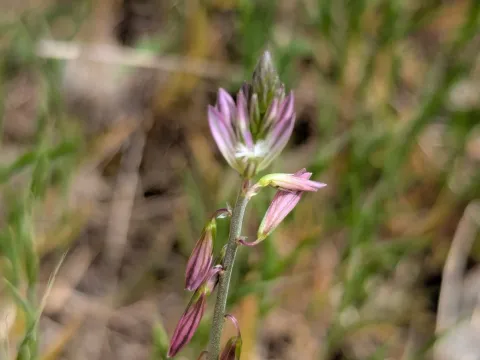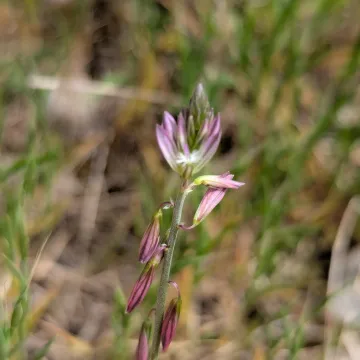
Mediterranean milkwort
Polygala monspeliaca
Description
Mediterranean milkwort (Polygala monspeliaca) is an annual herbaceous plant belonging to the Polygalaceae family. Unlike many other species within the genus that are perennials, this specific plant completes its life cycle within a single season, making it well-adapted to the volatile conditions of its native habitats. It is characterized by an upright stem and slender leaves, often displaying a delicate growth pattern.
The plant originates from the Mediterranean region, with a range spanning across Southern Europe, North Africa, and parts of the Near East. It naturally thrives in open, sunny environments such as dry meadows, rocky slopes, and maquis shrublands. Its evolutionary strategy is focused on maximizing growth during the spring months before the arrival of the intense summer drought.
Botanically, it is distinguished by small, loosely arranged racemes of flowers that showcase the unique morphology of the Polygalaceae family. The root system is primary and relatively simple, designed to extract moisture from arid, stony soils. Because it is an annual, the plant invests significant energy into producing robust seeds, ensuring its survival and propagation for the following season.
Regarding cultivation, Mediterranean milkwort requires excellent drainage and full sun exposure. It is highly intolerant of waterlogging, which can rapidly cause root rot and total loss of the crop. The soil should be light, sandy, or rocky with a neutral to slightly alkaline reaction. It does not require high levels of fertilization; in fact, fertile soils can lead to excessive foliage growth at the expense of floral development.
In terms of agricultural and commercial use, while it is not currently a major industrial crop, it remains a plant of interest for its potential phytochemical properties. Its susceptibility to pests includes common aphids and fungal pathogens related to soil moisture imbalances. Proper site selection and avoiding over-irrigation are the most critical components of successful management, ensuring the plant remains healthy throughout its short growing period.
- Preference for well-drained, stony soil compositions.
- Strict requirement for full sun exposure.
- Annual life cycle requires timely seed collection.
Photo gallery