Broomleaf Milkwort
Polygala virgata
Description
Broomleaf Milkwort, known scientifically as Polygala virgata, is an elegant perennial shrub belonging to the Polygalaceae family. It is widely recognized for its upright, slender habit and its ability to produce striking flower spikes. This shrub serves as an architectural element in garden design, providing height and texture to mixed borders.
Native to Southern Africa, this species thrives in climates where seasonal shifts are mild. Its natural habitat consists of diverse landscapes, from scrublands to forest margins. Because of its origin, the plant is well-suited to Mediterranean-style climates, requiring protection from hard frost and freezing conditions during the winter months.
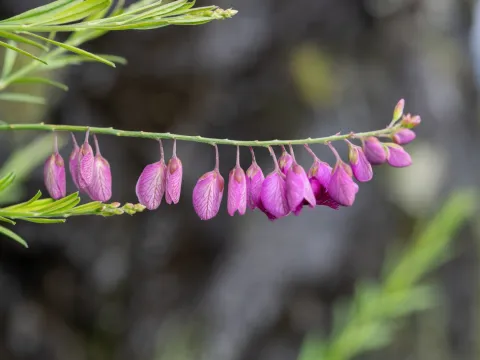
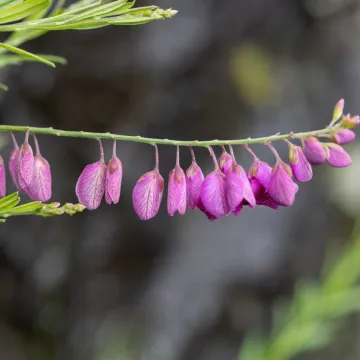
Botanically, the plant is characterized by its thin, flexible branches and long racemes of purple or violet flowers. The foliage is generally narrow and evergreen. Its root system is sturdy but sensitive to poorly drained soils, necessitating a substrate that allows for rapid water movement to prevent health complications.
Cultivation requires full sun exposure and well-aerated soil with a slightly acidic profile. Agronomic care is focused on consistent hydration during the initial establishment phase. Once mature, the plant displays a commendable level of drought resistance, although occasional irrigation during peak summer heat is recommended for optimal blooming performance.
- Striking purple inflorescences during spring.
- Requires excellent soil drainage.
- Low maintenance once fully established.
- Responds well to structural pruning.
While primarily used in landscaping, it also holds potential for specialized floriculture. The main threats to the plant include root rot caused by improper soil moisture and general opportunistic pests like aphids during periods of high humidity. Regular scouting and basic sanitary measures are usually sufficient to maintain the plant in a healthy condition.
Photo gallery