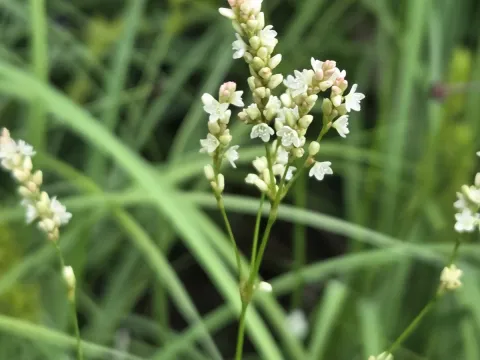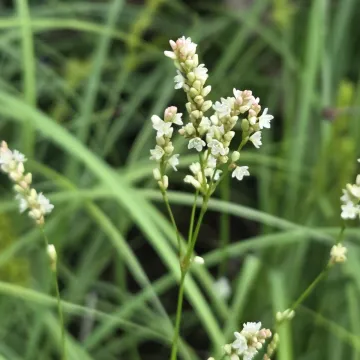
Opelousas smartweed
Polygonum opelousanum
Description
Polygonum opelousanum, commonly known as Opelousas smartweed, is a botanical species belonging to the Polygonaceae family. This plant is recognized for its specialized ecological niche, often thriving in moist environments where other species might struggle due to excess water or poor drainage.
The native range of this species is primarily located in North America, particularly in regions with significant seasonal precipitation. It acts as a bio-indicator of wet or damp soil conditions. In agricultural landscapes, it is often documented as a plant that colonizes low-lying areas, field margins, or riparian buffers associated with farm properties.
Botanically, it features the distinct nodes that give the genus Polygonum its name. The leaves are typically lanceolate and may exhibit glandular dots. The root system is relatively shallow but fibrous, allowing the plant to anchor effectively in soft, damp soil. Its inflorescences develop into spike-like clusters, producing small achenes that are wind or water-dispersed.
Regarding cultivation and soil requirements, it prefers high-moisture environments with abundant nitrogen levels. In an agricultural management context, producers should implement effective drainage strategies or targeted weed management practices to reduce its presence. The plant demonstrates high plasticity, meaning it can adjust its growth rhythm based on the annual moisture availability.
The species is susceptible to standard stressors for the Polygonaceae family, including fungal pathogens such as rusts and mildews. Common pests include aphids and mites that exploit the plant's succulent growth. While not a conventional crop, understanding its life cycle is essential for maintaining biodiversity in managed landscapes and controlling its spread into productive tillage zones.
Photo gallery