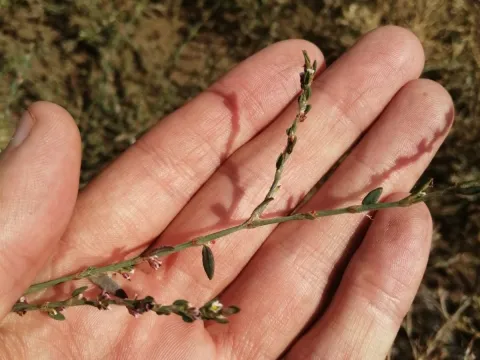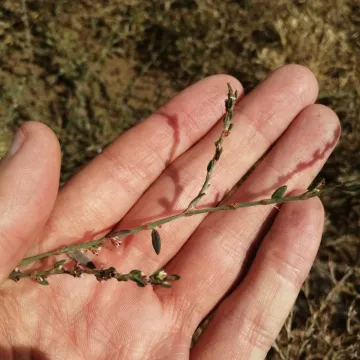
Spreading knotweed
Polygonum patulum
Description
Spreading knotweed (Polygonum patulum) is an annual plant belonging to the Polygonaceae family. While often viewed as a spontaneous plant, in certain agronomic contexts, it is analyzed for its resilience in arid environments and its ability to thrive where other cultivated crops might fail due to soil salinity or moisture stress.
The origin of the species is linked to the steppe and semi-arid zones of Eurasia. Its natural distribution demonstrates a remarkable capacity for colonization in open, sunny habitats with sandy or stony soil compositions. This botanical characteristic makes it a subject of interest for sustainable agriculture projects focused on land reclamation and erosion control.
Botanically, the plant is distinguished by its diffuse, spreading, or ascending stem, which branches significantly from the base. The leaves are generally linear-lanceolate, and the flowers are typically arranged in loose, spike-like racemes. This structure allows the plant to maximize photosynthetic efficiency while minimizing water loss, making it highly drought-tolerant.
Regarding climate and soil requirements, spreading knotweed is a thermophilic plant that favors high-heat growing seasons. It performs best on well-drained soils and is relatively indifferent to soil fertility levels, allowing it to grow on marginal lands. Minimal intervention is required for cultivation, though early weed control is necessary to ensure the plant establishes dominance in the plot.
The primary agricultural uses include its potential as a secondary forage source in dryland farming systems and its role in protecting soil from wind and water erosion. The species is generally resistant to many common pests, though fungal infections may occur in high-humidity conditions. Proper crop management involves monitoring for leaf-feeding insects and ensuring adequate spacing to prevent disease outbreaks.
Photo gallery