Japanese tearthumb
Polygonum senticosum
Description
Japanese tearthumb (scientific name Polygonum senticosum, also known as Persicaria senticosa) is a herbaceous perennial plant belonging to the Polygonaceae family. It is recognized for its climbing habit and rapid growth rate, which allows it to colonize disturbed areas effectively in its native habitats.
The native range of this species is centered in East Asia, encompassing China, Japan, Korea, and parts of the Russian Far East. It typically thrives in moist environments, such as forest edges, riverbanks, and marshy meadows, where it utilizes other vegetation as a trellis for its spiny stems.
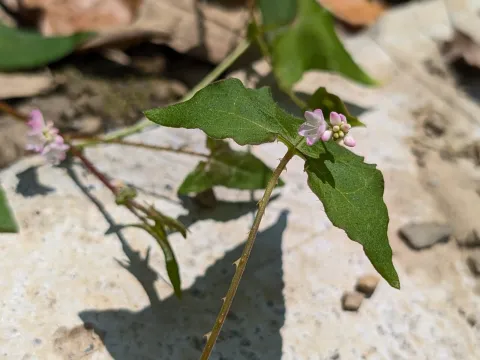
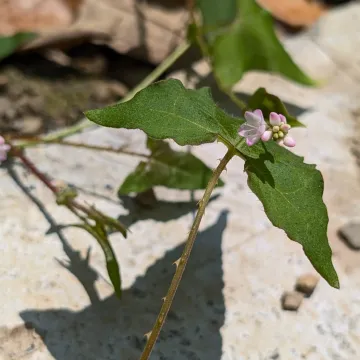
Botanically, the species is defined by its triangular, arrow-shaped leaves and sharp recurved prickles located along the stems, which give it its common name. The flowers are small and arranged in clusters, creating a subtle but distinct appearance during the blooming season. The plant's root system is robust and capable of sustained nutrient uptake.
Cultivation requirements involve managing soil moisture and fertility. The plant performs best in rich, moist soils with adequate drainage. While it is adaptable to different light conditions, it generally prefers locations that receive partial to full sun. Proper agricultural management should also address its tendency to spread, requiring regular monitoring and maintenance.
Economically, the plant is studied for its medicinal properties, particularly in Eastern traditional medicine systems where it has been used to treat various inflammatory conditions. In modern agriculture and horticulture, it is often treated with caution due to its potential to become an invasive weed if not carefully managed within a controlled setting.
- Distinctive recurved prickles on stems.
- Rapid vegetative growth cycle.
- High moisture and nutrient requirements.
- Potential for invasive spreading in disturbed habitats.
Photo gallery