Manton's polypody
Polypodium mantoniae
Description
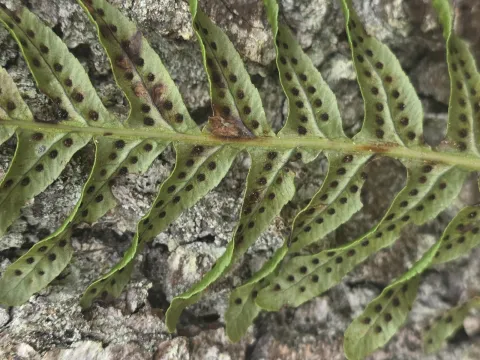
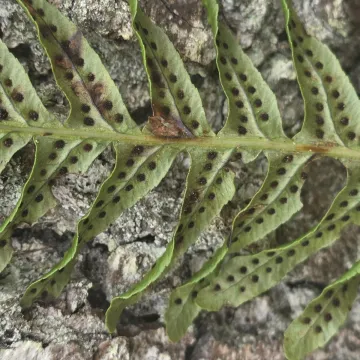
Manton's polypody (Polypodium mantoniae) is a distinct fern species belonging to the Polypodiaceae family. It is a natural hybrid taxon that has drawn interest for its unique morphological traits and its status within the Polypodium vulgare complex, representing a significant case of botanical hybridization in temperate zones.
The plant originates from the European temperate forests, primarily found in areas where its parent species coexist. Its natural habitat includes damp, shaded woodlands, mossy rocks, and stone walls. This ecological niche highlights its preference for stable, high-humidity environments that provide protection from extreme temperature fluctuations.
Botanically, the species is defined by its creeping rhizomes and leathery fronds that demonstrate high resilience. These fronds are evergreen or semi-evergreen, depending on local winter severity. The plant's ability to thrive in shaded environments is supported by its evolutionary adaptation to the low-light conditions of forest floors.
Cultivation of this fern requires a well-drained, humus-rich soil profile that mimics the forest floor environment. It is essential to maintain consistent moisture, although the root system must be protected from waterlogging to prevent root rot. Ideally, the plant should be situated in a north-facing position or under a canopy of larger trees to provide the necessary shade.
- Provide partial to full shade.
- Ensure well-draining, neutral to acidic soil.
- Avoid drying out the root system.
- Use organic mulch to retain moisture.
In terms of хозяйственное usage, Manton's polypody is primarily utilized in landscape gardening for shade-loving plant displays and rock gardens. Its ornamental value lies in its lush, green appearance and low-maintenance requirements. Common pests include slugs and snails, while fungal infections can occur if the humidity is too high without proper air circulation.
Photo gallery