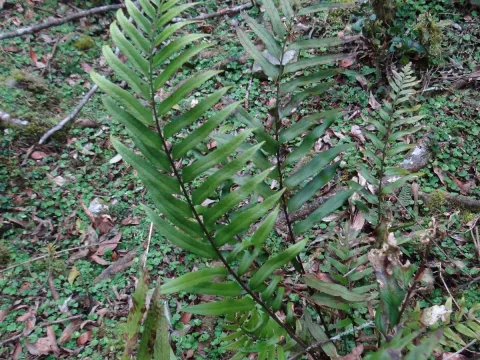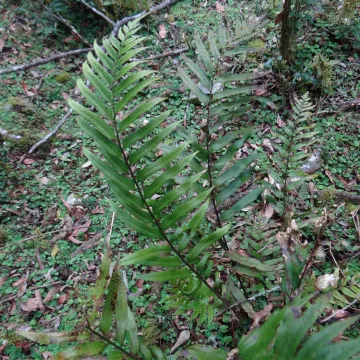
Hooker's holly fern
Polystichum hookerianum
Description
Hooker's holly fern (Polystichum hookerianum) is a perennial herbaceous plant belonging to the Dryopteridaceae family. While often categorized under ornamental horticulture rather than field agriculture, its cultivation requires specific botanical knowledge and precise management of microclimatic conditions to ensure optimal growth and health.
Originating from the high-altitude regions of the Himalayas, this species is naturally adapted to cool, moist, and high-humidity environments. Its habitat is typically found in understory forest zones, which provides a key hint for its successful placement in garden landscapes, favoring areas with filtered light and protection from harsh elements.
Botanically, the plant features firm, leathery fronds arranged in a basal rosette. The leaf structure is pinnate, displaying a glossy sheen that contributes to its high aesthetic value. The rhizomatous root system is robust but requires a specific soil structure to prevent issues related to water stagnation and root rot.
The agrotechnical requirements for this fern focus on soil porosity and drainage. It thrives in humus-rich, slightly acidic soil that retains moisture without becoming waterlogged. Regular mulching is highly recommended to mimic natural leaf litter, which helps maintain root temperature and soil moisture levels throughout the growing season.
Maintenance and pest control are critical for long-term health. Typical issues include susceptibility to slugs and snails, which can cause significant foliar damage. Diseases are generally limited to fungal rots triggered by poor air circulation or over-saturation of the growing medium. Maintaining consistent but moderate irrigation is essential for preventing these complications.
Photo gallery