Holly fern
Polystichum lonchitis
Description
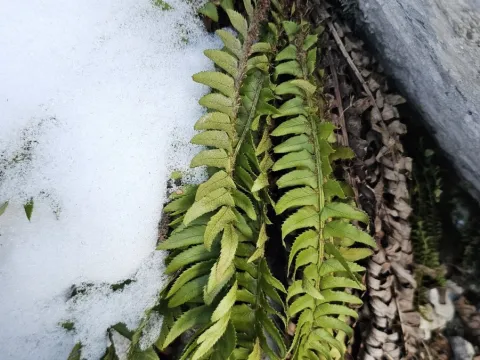
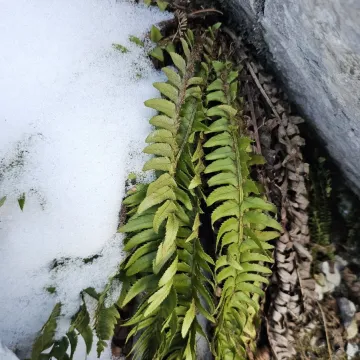
Holly fern (lat. Polystichum lonchitis) is a robust perennial fern belonging to the Dryopteridaceae family. It is highly valued in horticulture for its stiff, glossy, evergreen foliage and its remarkable ability to thrive in cool, mountainous regions where other ornamental plants might struggle.
Originating from the northern temperate zones, this fern is naturally adapted to rocky slopes, limestone crevices, and wooded areas. This historical habitat dictates its preference for well-drained, nutrient-rich soils that do not retain excess water, as the rhizomes are susceptible to rot in stagnant moisture.
Botanically, the plant is characterized by its once-pinnate fronds, which are lance-shaped and rigid. The leaflets have serrated edges, resembling the foliage of holly (Ilex), which gives the fern its common name. The plant grows in a compact, symmetrical rosette, maintaining its structural integrity throughout the year.
Cultivation requires careful attention to soil pH and drainage. Holly fern prefers alkaline or neutral soil conditions and thrives in partial shade. Unlike many other ferns, it is quite hardy and can withstand low temperatures, though it requires consistent moisture without ever becoming waterlogged to remain healthy.
- Thrives in alkaline, well-draining soil.
- Prefers partial to full shade locations.
- Cold-hardy and suitable for rock gardens.
- Low maintenance after successful establishment.
In terms of agricultural and landscape utility, it is a premier choice for rock gardens and shaded borders. While generally resistant to major pests, growers should monitor for slugs and snails during the spring flush. Proper spacing and airflow are crucial to preventing fungal leaf spots and root rot in high-humidity environments.
Photo gallery