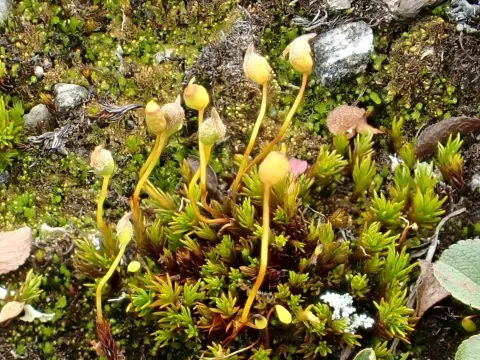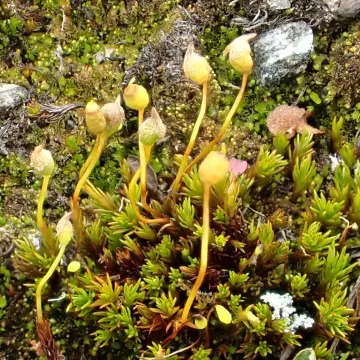
Polytrichastrum sexangulare
Polytrichastrum sexangulare
Description
Polytrichastrum sexangulare is a species of perennial moss belonging to the Polytrichaceae family. While not a conventional agricultural crop, it is a significant botanical subject within high-altitude and arctic ecosystems, where it plays a critical role in soil stabilization and moisture retention.
The plant originates from and is distributed across cold, temperate, and arctic regions of the Northern Hemisphere. It is typically found on mountain slopes and in tundra habitats where snow cover persists for large parts of the year. Due to these specific environmental demands, the species does not lend itself to traditional large-scale cultivation or farming practices.
Botanically, it is characterized by rigid, linear leaves and stems that appear angular in cross-section. The name sexangulare refers to the distinct six-angled shape of the spore-bearing capsules, which distinguishes it from other related species. Reproduction occurs via spores, and the plant thrives in stable, humid environments with moderate soil acidity.
The ecological requirements include constant moisture, cool temperatures, and high light intensity. In terms of agronomy or landscape management, no specific techniques exist for the cultivation of this moss, as it is primarily a wild species that requires a natural, undisturbed high-altitude habitat to survive and proliferate effectively.
The economic value of this moss is limited to its ecological service, particularly in preventing erosion and supporting the development of alpine soil structures. It is generally free from the pests and diseases commonly associated with agricultural crops. Its survival is strictly dictated by natural climatic conditions and the overall health of the mountain ecosystem.
Photo gallery