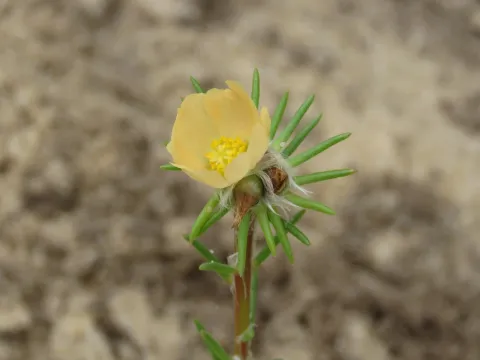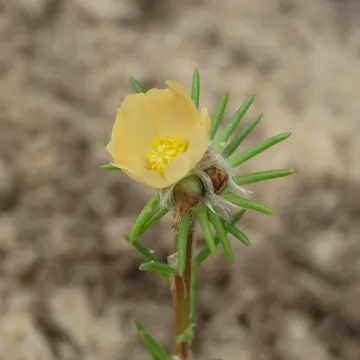

High purslane
Portulaca elatior
Description
Portulaca elatior, commonly known as high purslane, is a succulent plant species belonging to the family Portulacaceae. Unlike its low-growing relatives, this species displays a more upright growth habit, making it a unique subject for agricultural and horticultural study.
The plant is native to the regions of South America, where it thrives in arid and semi-arid environments. Its natural habitat typically consists of sandy or rocky soils, which has shaped its biological ability to endure long periods of drought and high solar radiation.
Botanically, Portulaca elatior is defined by its succulent, water-storing stems and leaves, which allow the plant to maintain metabolic processes even under water stress. The root system is relatively shallow, necessitating careful soil management to prevent structural damage or root rot from excessive moisture.
Cultivation requirements involve providing full sun exposure and well-drained, porous soil. The plant does not tolerate waterlogging, so soil preparation must prioritize aeration. In terms of agronomy, maintaining a strict irrigation schedule is essential, as the plant reacts negatively to excessive soil moisture.
- Prefers full sun for optimal development.
- Requires sandy, well-draining soil mixes.
- Sensitive to frost and cold temperature drops.
- Beneficial for drought-prone landscapes.
The economic value of this crop is primarily focused on its resilience in hot, dry climates. Common threats include root pathogens encouraged by over-watering and insect pests like aphids or spider mites, which can be managed through integrated pest control strategies and proper field hygiene.
Photo gallery