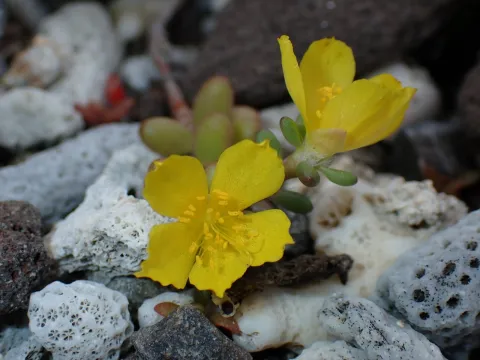

Formosan purslane
Portulaca formosana
Description
Formosan purslane (Portulaca formosana) is an annual herbaceous plant belonging to the Portulacaceae family. This species is a unique member of the genus, characterized by its specialized adaptation to harsh coastal environments and its potential as a resilient crop in specific agricultural niches.
The plant originates from the coastal regions of Taiwan and surrounding islands. Its native habitat is defined by sandy, saline soils and high exposure to intense sunlight and wind. These environmental pressures have shaped the plant's physiological development, enabling it to thrive where many traditional crops would fail.
Botanically, it is a succulent with fleshy stems and leaves that store water efficiently. The leaves are typically succulent and alternate, while the small, yellow flowers are terminal and bloom primarily under full sunlight. The root system is relatively shallow, designed to absorb moisture rapidly from light, sandy soils after rainfall.
For successful cultivation, Portulaca formosana requires well-draining, sandy loam soil and full exposure to sunlight. Proper spacing is crucial to prevent fungal diseases caused by high humidity around the base of the plant. Regular, moderate watering is preferred over deep irrigation, as the root system is highly susceptible to rot in waterlogged conditions.
The main uses of Formosan purslane include its application as a nutrient-dense edible vegetable and its function as an ornamental ground cover in arid landscaping. Typical pests include aphids and mites, while the most significant disease threats involve root rot and powdery mildew, which can be managed through effective crop rotation and humidity control.
Photo gallery