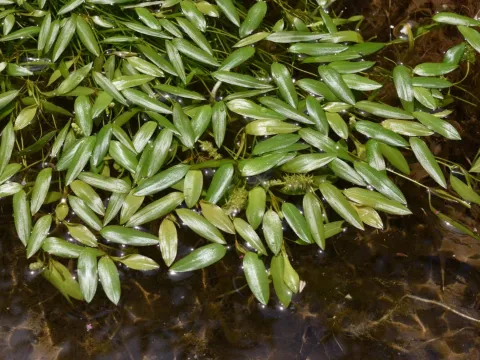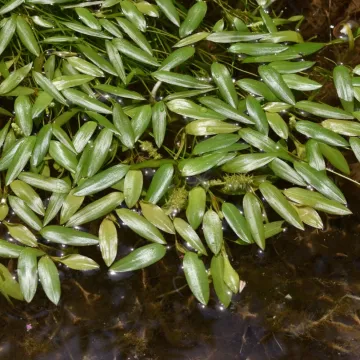
Crested pondweed
Potamogeton cristatus
Description
Crested pondweed (Latin: Potamogeton cristatus) is a perennial aquatic plant classified within the family Potamogetonaceae. It is a submersed macrophyte known for its resilience and vital role in aquatic ecosystems. As an agricultural object, it is primarily managed in the context of aquaculture and environmental restoration of artificial water bodies.
The native range of this species is centered in East Asia, including regions such as Japan and China. It typically inhabits stagnant or slow-moving freshwater environments, such as irrigation canals, rice fields, and ponds. Due to its adaptation to specific water depths and light regimes, it has become a recognized species in temperate and subtropical aquatic farming systems.
Botanically, Potamogeton cristatus exhibits a delicate structure with thin, branching stems and linear leaves. The most distinct feature is the crested appearance of its fruits, which serves as a key morphological identifier. The plant relies on both seeds and vegetative fragments to colonize new areas within a water body, making it a highly successful colonizer in favorable conditions.
Regarding climate and soil requirements, this species thrives in moderate water temperatures and prefers nutrient-rich silty or muddy substrates. Efficient management requires maintaining optimal water transparency, as excessive shading can stunt growth. In commercial settings, monitoring water chemistry—specifically nitrogen and phosphorus levels—is essential to prevent uncontrolled biomass accumulation.
The economic and practical utilization of this plant is diverse, spanning from being a primary feed source for herbivorous fish to serving as a natural bio-purification agent. In decorative pond management, it is valued for its ability to oxygenate water. While generally hardy, the plant can be susceptible to leaf-mining insects and certain fungal infections if water circulation remains stagnant for prolonged periods.
Photo gallery