Ochreate pondweed
Potamogeton ochreatus
Description
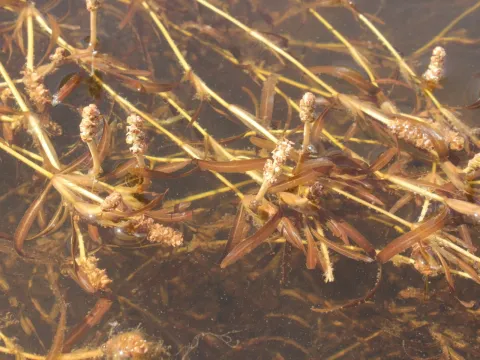
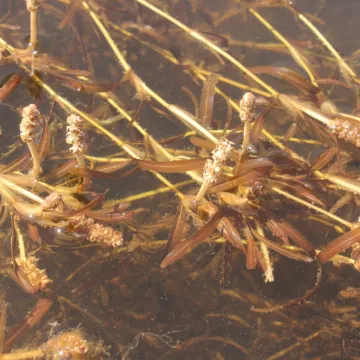
Ochreate pondweed (Potamogeton ochreatus) is a perennial aquatic herb belonging to the Potamogetonaceae family. This species is a submerged hydrophyte, adapted to living entirely under the water surface, where it plays a critical role in aquatic ecosystems.
Botanically, it is characterized by its slender stems and linear leaves that feature distinct sheaths (ochreae) at their bases, which distinguishes it from related species. The root system is primarily used for anchorage in the substrate, while the plant absorbs nutrients directly from the water column.
The plant thrives in still or slow-flowing freshwater environments with moderate light penetration. Successful cultivation in controlled environments requires maintaining water clarity and optimal temperature ranges, typically avoiding extreme fluctuations that inhibit the photosynthesis process.
In terms of agricultural and environmental use, this species is frequently managed in aquaculture as a feed source for herbivorous fish and as a habitat provider. Its dense growth also aids in biological filtration, helping to maintain water quality in fish ponds and reservoirs.
Common issues affecting its vitality include high levels of water turbidity, eutrophication, and competition with invasive algal species. Pests often include freshwater snails and insect larvae that graze on the foliage, while pathogen attacks are usually linked to poor water quality conditions.
Photo gallery