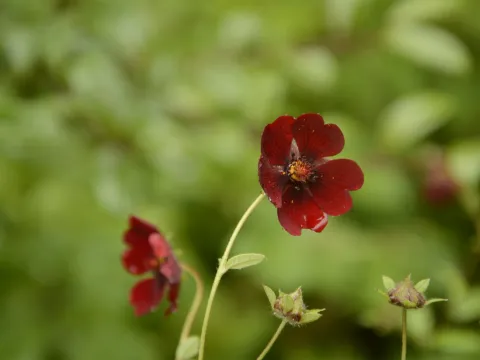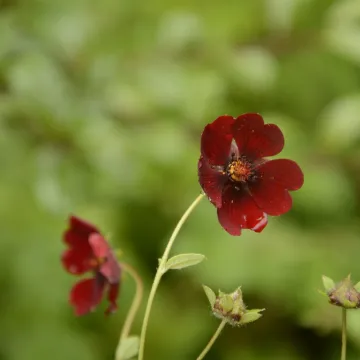
Himalayan cinquefoil
Potentilla atrosanguinea
Description
Himalayan cinquefoil (Potentilla atrosanguinea) is a robust herbaceous perennial species belonging to the Rosaceae family. Known for its intense dark red blooms, this plant is highly valued by gardeners for its aesthetic appeal and low-maintenance nature in diverse landscapes.
Native to the high-altitude regions of the Himalayas, this species is naturally adapted to cool environments and rocky slopes. Its evolutionary history in mountainous terrain contributes to its excellent hardiness, making it a reliable choice for temperate climate regions worldwide where it is cultivated in gardens and botanical collections.
Botanically, the plant forms a clump of basal leaves that are palmate and covered in fine hairs, giving them a silvery texture. The flowering stems grow up to 60 centimeters in height, bearing vibrant, blood-red flowers with dark centers that contrast beautifully with the foliage. The blooming period typically spans from early summer through early autumn.
For optimal growth, Potentilla atrosanguinea requires full sun and well-drained, fertile soil. It is particularly sensitive to waterlogged conditions, which can lead to root rot. Successful agricultural practice involves ensuring good soil aeration, providing moderate watering during dry spells, and placing the plants in sites where air circulation is adequate.
- Propagation via division of established clumps.
- Seed sowing in spring for new stock.
- Deadheading spent flowers to encourage repeat blooming.
- Regular weeding to prevent competition for nutrients.
- Winter protection in areas with extreme frost.
The primary use of Himalayan cinquefoil is in ornamental horticulture. It is perfectly suited for rock gardens, sunny borders, and perennial beds. Beyond its visual appeal, it is a staple for gardeners seeking to introduce pollinator-friendly plants that can thrive in challenging soil conditions without intensive human intervention.
Typical plant health concerns include fungal issues like powdery mildew and leaf spots, which often occur in humid, poorly ventilated environments. Common pests such as aphids or spider mites can appear during prolonged dry periods. Proactive garden hygiene, such as thinning out foliage to improve airflow and timely pest management, ensures the longevity and health of the plantings.
Photo gallery